Warum KI-native Energieprozesse für Industrie und Rechenzentren entscheidend werden, wenn Hitze, Kälte, Wasserknappheit und volatile Strompreise zusammenkommen.
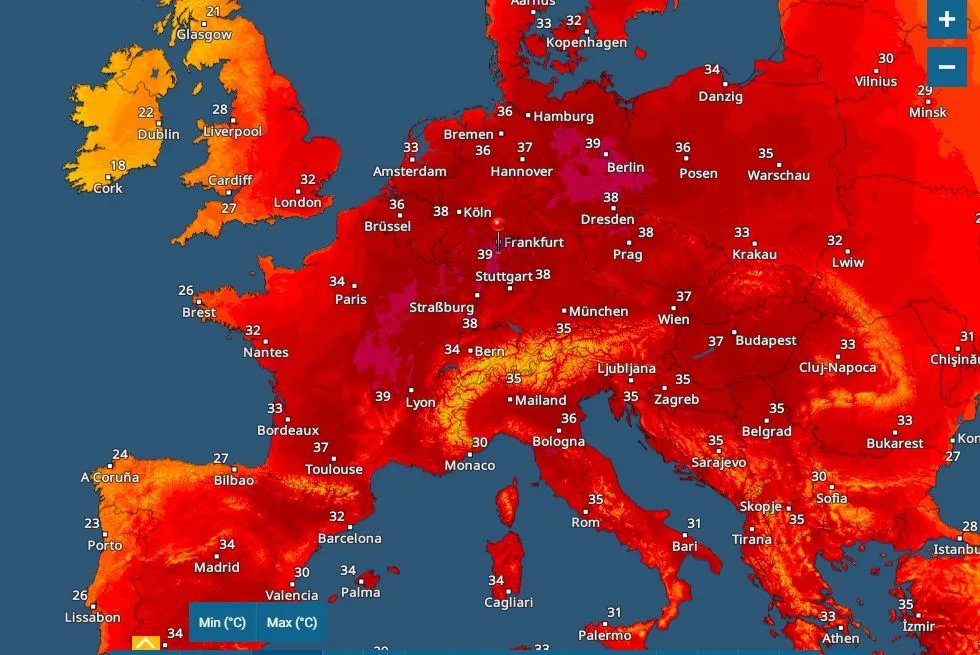
Ende Juni 2026 wurde Europa erneut daran erinnert, dass Extremwetter kein fernes Zukunftsszenario mehr ist. Eine schwere Hitzewelle ließ die Temperaturen in weiten Teilen Europas auf über 40 °C steigen. In Deutschland berichtete dpa/WELT, dass der Deutsche Wetterdienst (DWD) in Möckern-Drewitz in Sachsen-Anhalt einen vorläufigen nationalen Temperaturrekord von 41,5 °C registriert habe. Auch in der Schweiz, Dänemark und Tschechien wurden Rekorde gemeldet. Zugleich beschädigte die Hitze Verkehrsinfrastruktur, störte den Bahnverkehr und setzte Krankenhäuser sowie Pflegeeinrichtungen unter Druck [11] [12].
Für industrielle Energieteams sind genau solche Ereignisse der Moment, in dem sich die Diskussion verändert. Über Jahre war der Business Case für industrielles Energiemanagement klar: Energieverbrauch senken, Kosten reduzieren und CO2-Emissionen verringern. Dieser Business Case bleibt stark. Doch Extremwetter und Marktvolatilität verändern die Perspektive. Wenn Hitzewellen, Kälteperioden, Wasserknappheit und Strompreisspitzen gleichzeitig auftreten, lautet die wichtigste Frage nicht mehr nur: „Wie viel Energie können wir sparen?“ Die dringendere Frage wird:
Können wir Produktion oder Rechenzentren sicher, zuverlässig und innerhalb der betrieblichen Grenzen am Laufen halten?
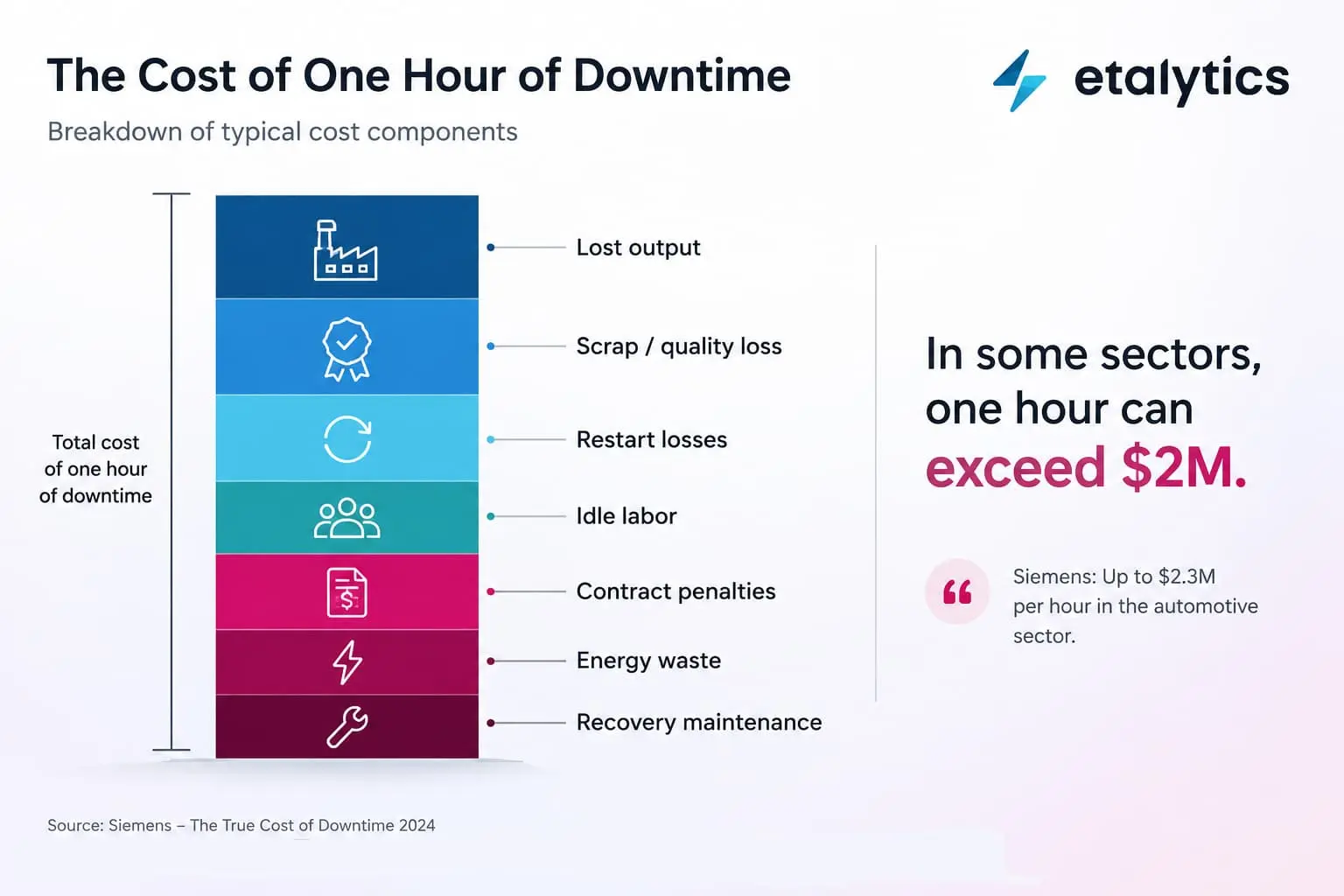
Für energieintensive Industriestandorte und Rechenzentren ist dieser Perspektivwechsel grundlegend. Einige Prozentpunkte Energieeinsparung können eine hervorragende Rendite erzielen. Doch eine einzige Stunde Stillstand kann Hunderttausende kosten – in manchen Branchen sogar Millionen. Die Stillstandsanalyse von Siemens aus dem Jahr 2024 schätzt die Kosten einer verlorenen Produktionsstunde im Automobilsektor auf bis zu 2,3 Millionen US-Dollar. Derselbe Bericht geht davon aus, dass die 500 größten Unternehmen der Welt durch ungeplante Stillstände jährlich fast 1,4 Billionen US-Dollar verlieren. Genau deshalb erweitert sich der Wert von Energy Intelligence.
Es geht nicht mehr nur um Effizienz unter normalen Bedingungen. Es geht um Resilienz unter Extrembedingungen.
Der Betriebsrahmen verändert sich – heute, nicht irgendwann
Klimawandel erhöht nicht nur Durchschnittstemperaturen. Er verändert auch die Extrembedingungen, unter denen industrielle Energiesysteme und Gebäude zuverlässig funktionieren müssen. Der IPCC stellt fest, dass menschengemachte Treibhausgasemissionen bereits zu einer höheren Häufigkeit und/oder Intensität einiger Wetter- und Klimaextreme geführt haben, insbesondere bei Temperaturextremen [2]. Copernicus und die WMO berichten, dass sich Europa seit den 1980er-Jahren doppelt so schnell erwärmt wie der globale Durchschnitt und damit der am schnellsten wärmer werdende Kontinent der Erde ist [3] .
Die Hitzewelle Ende Juni 2026 machte diese Realität greifbar. AP berichtete, dass die Tagestemperaturen vielerorts in Europa über 40 °C lagen, während hohe Nachttemperaturen es Menschen, Gebäuden und Infrastruktur erschwerten, wieder abzukühlen. Eine von AP zitierte Schnellstudie der World Weather Attribution kam zu dem Schluss, dass die rekordverdächtige Hitze und Luftfeuchtigkeit vor einigen Jahrzehnten ohne den Klimawandel praktisch unmöglich gewesen wäre und heute deutlich wahrscheinlicher ist. Für industrielle Betreiber bedeutet das: Historische Betriebsannahmen werden weniger verlässlich.
Kälteanlagen, Heizsysteme, Lüftungsanlagen, Druckluftsysteme, Prozesskältekreisläufe, thermische Speicher, Wassersysteme und elektrische Infrastruktur sind zunehmend Bedingungen ausgesetzt, die außerhalb des Bereichs liegen, für den viele Anlagen ursprünglich ausgelegt oder betrieben wurden. Ein Produktionsstandort, der im Klima von gestern resilient war, ist unter den Extrembedingungen von morgen möglicherweise nicht mehr resilient.
Und in vielen Fällen ist der erste Engpass nicht offensichtlich.
- Es kann eine Kältemaschine sein, die bei hohen Außentemperaturen an Effizienz verliert.
- Es kann ein adiabater Kühler sein, der genau dann mehr Wasser benötigt, wenn der Wasserverbrauch eingeschränkt ist.
- Es kann eine Produktionshalle sein, die Grenzwerte für den Arbeitsschutz nicht mehr einhalten kann.
- Es kann ein Heizsystem sein, das während einer kalten, windarmen Winterperiode an seine Leistungsgrenze kommt.
- Es kann eine Strompreisspitze sein, die einen konventionellen Betrieb wirtschaftlich schmerzhaft macht.
- Oder es kann die Kombination all dieser Faktoren gleichzeitig sein
Sie wollen nicht nur wissen, wie das System im vergangenen Jahr funktioniert hat. Sie wollen wissen, was passiert, wenn der nächste Sommer heißer wird, wenn Wasserverfügbarkeit eingeschränkt ist, wenn Strompreise steigen, wenn Produktionslasten zunehmen oder wenn eine kritische Anlage ausfällt.
Hitzewellen machen aus Energieeffizienz Produktionsresilienz
Hitzewellen sind das sichtbarste Beispiel dieser neuen Realität. Während extremer Hitze stehen Industriestandorte vor einer schwierigen Kombination von Effekten:
- Der Kühlbedarf steigt.
- Kühlanlagen werden häufig weniger effizient.
- Innentemperaturen steigen.
- Anforderungen an den Arbeitsschutz werden kritischer.
- Der Strombedarf im gesamten Netz steigt.
- Spotmarktpreise können stark ausschlagen.
- Wasserverfügbarkeit kann eingeschränkt sein.
- Produktqualität und Prozessstabilität können beeinträchtigt werden.
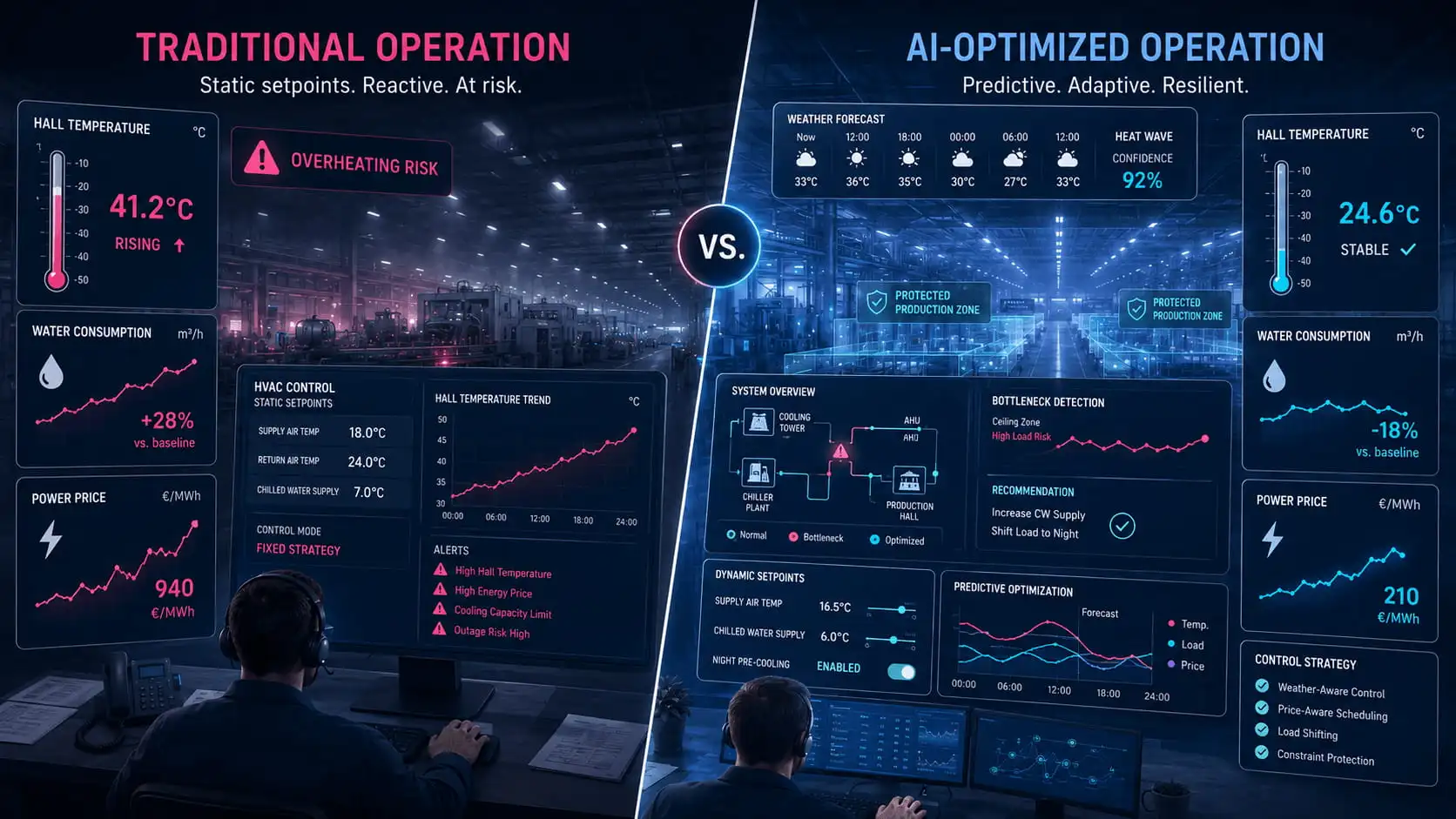
Kurz gesagt: Das System muss unter schlechteren Bedingungen mehr leisten. Genau hier werden statische Sollwerte zum Risiko. Traditionelle HLK- und Kühlsysteme werden häufig mit festen Regeln betrieben: festen Vorlauftemperaturen, festen Schaltschwellen, festen Aktivierungspunkten für adiabate Kühlung, fester Lüftungslogik oder festen Nachtkühlstrategien. Unter durchschnittlichen Bedingungen funktionieren diese Regeln oft ausreichend – wenn auch nicht immer effizient. Während einer Hitzewelle ändert sich die richtige Betriebsstrategie jedoch von Stunde zu Stunde.
Eine Strategie, die am Morgen den Energieverbrauch minimiert, kann am Nachmittag ein Temperaturrisiko erzeugen. Eine wasserintensive Kühlstrategie kann während eines produktionskritischen Peaks gerechtfertigt sein, sollte aber reduziert werden, wenn die Luftfeuchtigkeit steigt oder lokale Wasserrestriktionen strenger werden. Eine Nachtkühlstrategie schafft nur dann Wert, wenn sie mit der Wetterprognose des nächsten Tages, dem Produktionsplan und dem thermischen Verhalten des Gebäudes abgestimmt ist. Die Herausforderung besteht nicht mehr darin, den einen perfekten Sollwert zu finden.
Die Herausforderung besteht darin, kontinuierlich innerhalb eines sicheren und effizienten Betriebsrahmens zu bleiben.
Wenn Arbeitsbedingungen kritisch werden, rückt Produktionsausfall näher
Hitzeresilienz ist auch eine Frage des Arbeitsschutzes. Die Internationale Arbeitsorganisation beschreibt Hitzestress als eine der zentralen Folgen der globalen Erwärmung und prognostiziert, dass bis 2030 weltweit jedes Jahr mehr als 2 % der gesamten Arbeitsstunden verloren gehen könnten, weil es zu heiß zum Arbeiten ist oder Beschäftigte langsamer arbeiten müssen [4]. In industriellen Umgebungen wird das sehr konkret. Die deutsche Arbeitsstättenregel ASR A3.5 gibt ein praktisches Beispiel: Arbeitsräume sollen grundsätzlich 26 °C nicht überschreiten. Ab 30 °C müssen Arbeitgeber wirksame Maßnahmen ergreifen. Ab 35 °C ist ein Raum während der Überschreitung ohne besondere Maßnahmen nicht mehr als Arbeitsraum geeignet [5] .
Für Produktionsverantwortliche bedeutet das: Ein Kühlungsengpass kann schnell zu einem Personal- und Arbeitsschutzengpass werden. Sobald sichere Arbeitsbedingungen nicht mehr eingehalten werden können, muss Produktion möglicherweise gedrosselt, unterbrochen oder gestoppt werden – unabhängig von Auftragslage, Energiepreis oder Produktionsziel. Deshalb muss Energieoptimierung mit operativem Risiko verbunden werden. Der Business Case ist nicht nur die vermiedene Kilowattstunde. Er ist auch das vermiedene Überhitzungsereignis, die vermiedene Qualitätsabweichung, die vermiedene sicherheitskritische Arbeitsbedingung und die vermiedene Produktionsunterbrechung.
Kälteperioden und „Dunkelflaute“ sind ein anderer Stresstest
Extreme Hitze ist nicht das einzige Szenario, auf das sich Industriestandorte vorbereiten müssen. Auf der Kälteseite sind die Risiken anders, aber ebenso relevant:
- Der Heizbedarf steigt.
- Wärmepumpen und Wärmerückgewinnungssysteme können unter schwierigeren Bedingungen arbeiten.
- Außenanlagen, Wassersysteme und Versorgungstechnik können durch Frost gefährdet sein.
- Das Anfahrverhalten nach Stillständen kann kritischer werden.
- Der Strombedarf kann stark steigen.
- Geringe Wind- und Solarstromerzeugung kann die Stromversorgung verknappen.
- Netz- und Marktpreise können volatiler werden.
Der IPCC erwartet, dass Kälteextreme mit fortschreitender Erwärmung insgesamt seltener werden. Das bedeutet jedoch nicht, dass Resilienz auf der Kälteseite irrelevant wird. Kälteextreme treten weiterhin auf. Wenn sie mit niedriger erneuerbarer Erzeugung, hoher Nachfrage oder ungeplanten Anlagenausfällen zusammenfallen, können erhebliche operative und marktliche Belastungen entstehen. Der Bericht „Electricity 2025“der IEA beschreibt mehrere kurzzeitige Dunkelflaute-Ereignisse in Nordeuropa im Winter 2024/2025, bei denen die kombinierte Wind- und Solarstromerzeugung sehr niedrig war. Diese Ereignisse führten zu einer angespannteren Versorgungslage und mehreren Stunden mit extrem hohen Großhandelspreisen für Strom [6].
Der ENTSO-E Winter Outlook 2025–2026 hebt ebenfalls hervor, dass die europäische Versorgungslage insgesamt zwar günstig ist, einzelne Systeme unter außergewöhnlich ungünstigen Betriebsbedingungen in Kombination mit Kälte und hohen ungeplanten Ausfällen jedoch Risiken ausgesetzt sein können. [7] .Für Industrieunternehmen bedeutet das: Resilienz muss ganzjährig gedacht werden. Derselbe digitale Zwilling, der hilft, Kühlgrenzen während einer Hitzewelle zu simulieren, kann auch winterliche Heizspitzen, Kaltstartverhalten, Anlagenredundanz, Potenziale thermischer Speicher und die Exponierung gegenüber Strommarktvolatilität abbilden.
Strommärkte werden zu einer weiteren Betriebsgrenze
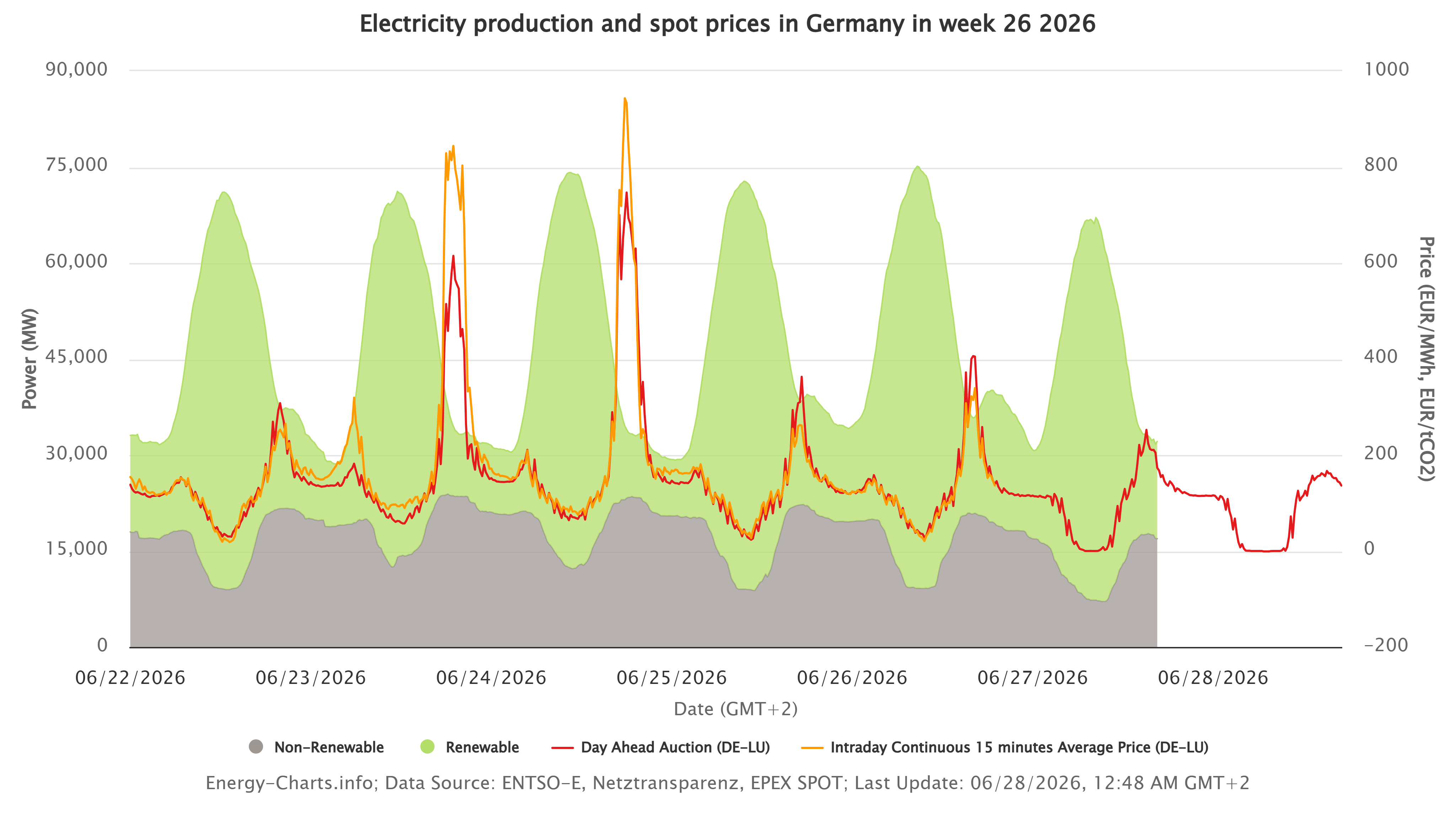
Energiesysteme sind zunehmend Preisextremen in beide Richtungen ausgesetzt. Einerseits berichtet die IEA, dass negative Großhandelspreise für Strom in Europa häufiger werden. 2024 verzeichnete Finnland negative Preise in 8 % der Stunden; in Deutschland und den Niederlanden stieg der Anteil negativer Preisstunden auf rund 5 %. [8] Andererseits können Extremwetterlagen auch starke Preisspitzen auslösen. Hitzewellen erhöhen den Kühlbedarf, während Hochdruckwetterlagen die Windstromerzeugung reduzieren können. Während jüngerer europäischer Hitzewellen stiegen deutsche Day-Ahead-Strompreise, weil der Kühlbedarf zunahm und geringere Windstromerzeugung durch teurere Gas- und Kohlekraftwerke ausgeglichen werden musste. [9]
Für Industriestandorte entsteht daraus eine neue Chance – und ein neues Risiko. Die Chance heißt Flexibilität. Wenn ein Standort vorkühlen, vorheizen, thermische Speicher laden oder flexible Lasten in günstigere Stunden verschieben kann, lassen sich Kosten reduzieren und das Energiesystem unterstützen. Das Risiko besteht darin, dass Flexibilität niemals die Produktion gefährden darf. Eine Fabrik kann die Kühlleistung nicht einfach während einer teuren Stunde reduzieren, wenn dadurch Grenzwerte für den Arbeitsschutz überschritten werden könnten. Ein Pharmastandort kann den HLK-Betrieb nicht verschieben, wenn dadurch Temperatur- oder Feuchtebegrenzungen gefährdet werden. Ein Rechenzentrum kann nicht nur niedrigen Strompreisen folgen, wenn dadurch die thermische Stabilität leidet.
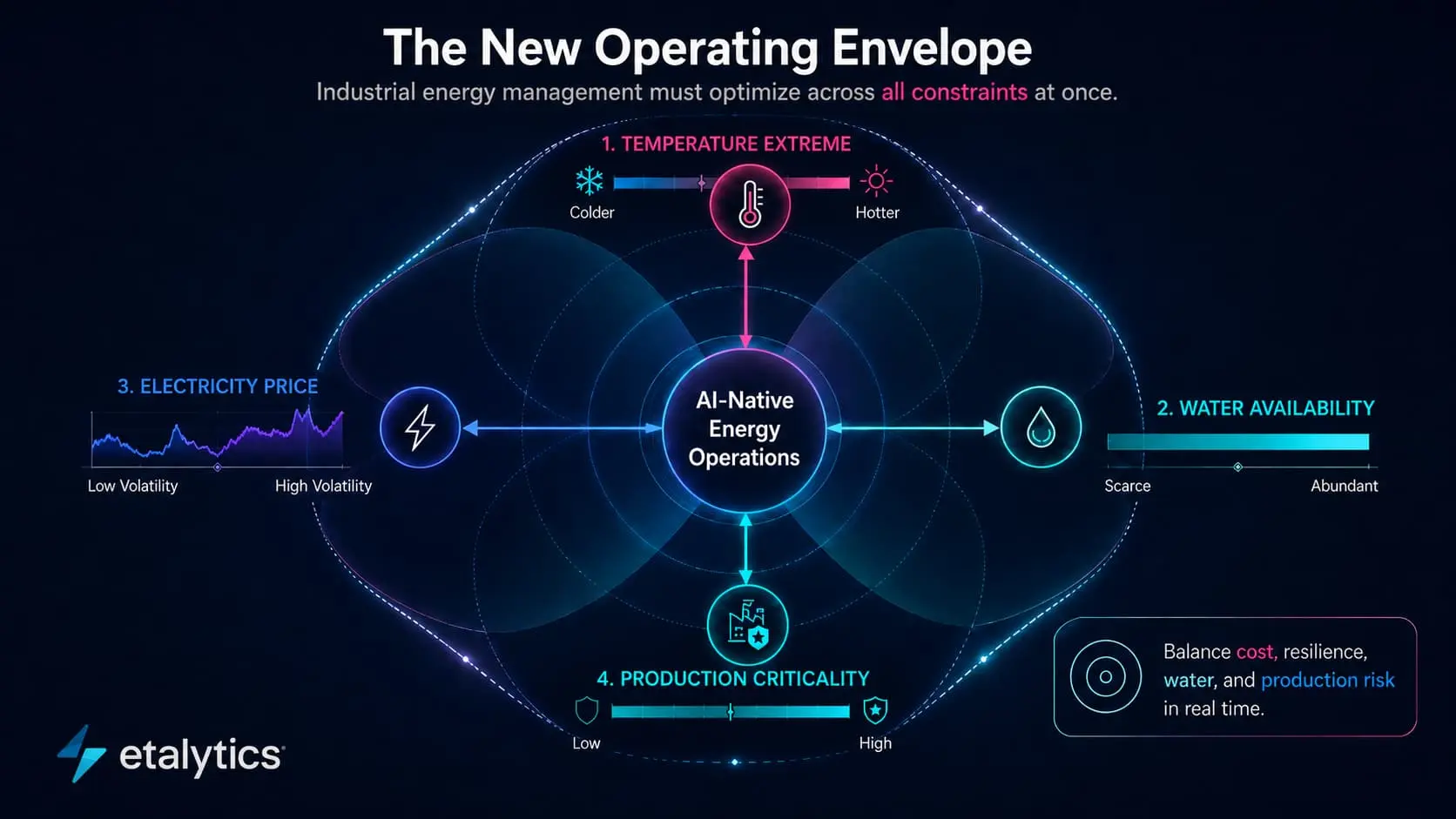
Genau hier werden KI-native Energieprozesse entscheidend. Das System muss physikalische Grenzen verstehen, zukünftige Zustände prognostizieren und mehrere Ziele gleichzeitig optimieren:
- Kosten
- Energieverbrauch
- CO2-Emissionen
- Temperaturstabilität
- Arbeitsschutz
- Prozessqualität
- Anlagengrenzen
- Wasserverbrauch
- Produktionskontinuität
Der Wert liegt nicht nur darin, auf Preissignale zu reagieren. Der Wert liegt darin, Flexibilität sicher zu nutzen.
Wasserknappheit verändert die Logik adiabater Kühlung
Wasser wird Teil der Gleichung im Energiesystembetrieb. Adiabate Kühlung kann während Hitzewellen wertvolle zusätzliche Kühlleistung bereitstellen. Gleichzeitig erhöht sie den Wasserverbrauch – oft genau dann, wenn Dürre- und Wasserknappheitsrisiken besonders relevant sind. Die Europäische Umweltagentur berichtet, dass Wasserknappheit im Jahr 2023 in mindestens einer Saison 28 % des EU-Gebiets betroffen hat. Sie stellt außerdem fest, dass der Klimawandel die Häufigkeit, Intensität und Auswirkungen von Dürreereignissen voraussichtlich erhöhen wird. [10] Damit wird adiabate Kühlung zu einem dynamischen Optimierungsproblem. In manchen Stunden kann Wassereinsatz gerechtfertigt sein, um Menschen, Produktion und Prozessstabilität zu schützen. In anderen Stunden sollte das System adiabaten Betrieb reduzieren und stattdessen andere Hebel nutzen: Vorkühlung, Nachtkühlung, thermische Speicher, angepasste Vorlauftemperaturen, optimierten Pumpenbetrieb oder alternative Kühlanlagen.
Die richtige Entscheidung hängt ab von:
- Außentemperatur
- Luftfeuchtigkeit
- Wasserverfügbarkeit
- Lokalen Wasserrestriktionen
- Strompreisen
- Produktionskritikalität
- Anlagenkapazität
- Prognostiziertem thermischem Verhalten
Ein fixer adiabater Sollwert kann diese Zielkonflikte nicht abbilden. Ein dynamisches, prognosebasiertes Optimierungssystem kann das.
Szenariosimulation: von reaktiver Feuerwehrarbeit zu vorbereitetem Betrieb
Eines der stärksten Signale, die wir bei Kunden sehen, ist die wachsende Nachfrage nach Extrem-Szenariosimulationen. Energieteams wollen zunehmend Fragen beantworten wie:
- Was passiert, wenn die Außentemperatur um weitere 3 °C steigt?
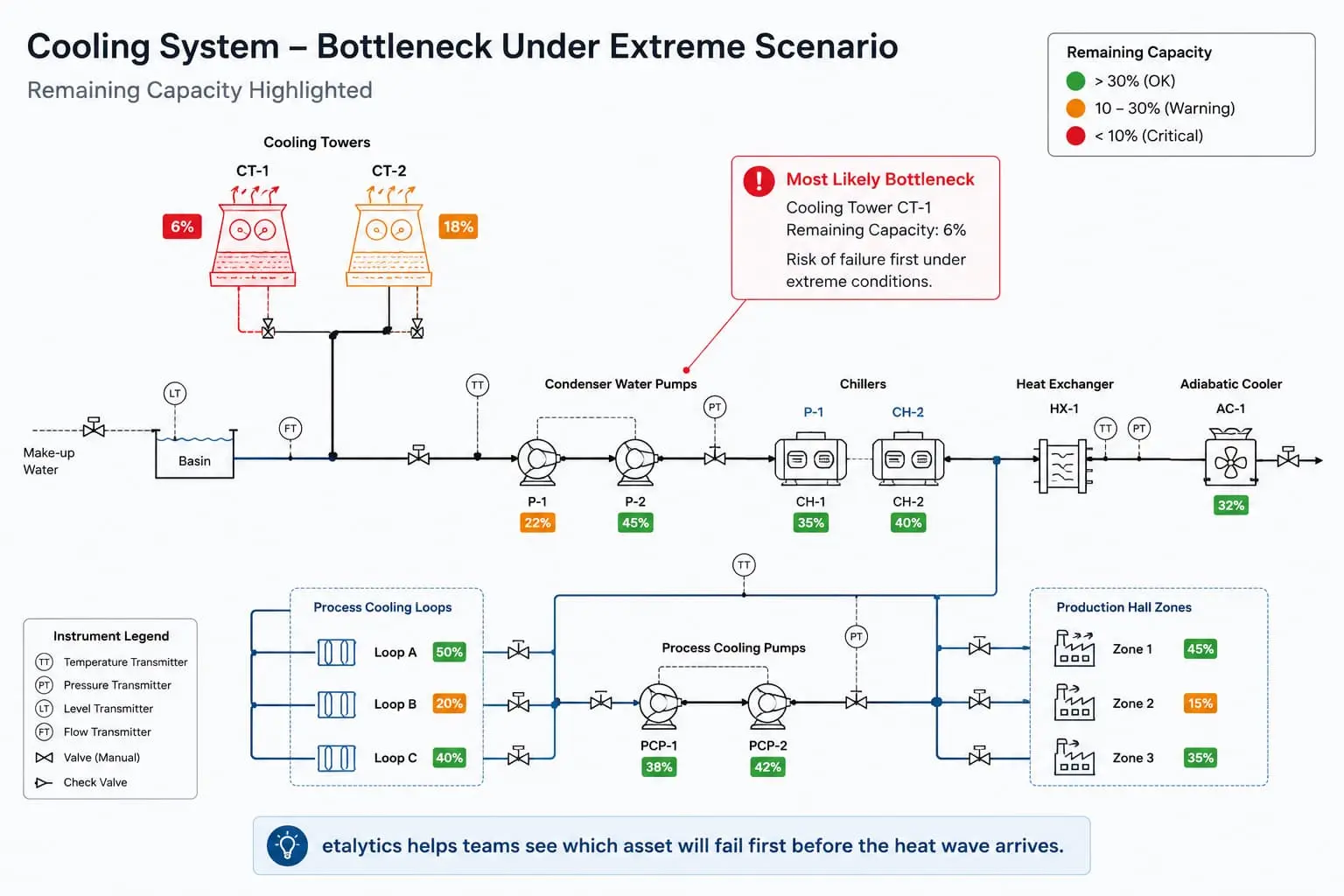
- Welche Kühlanlage wird zuerst zum Engpass?
- Wie lange können wir sichere Produktionsbedingungen aufrechterhalten?
- Was passiert, wenn adiabater Wassereinsatz eingeschränkt wird?
- Welche Zonen sind am stärksten von Überhitzung bedroht?
- Können wir Kühllasten aus teuren Strompreis-Peaks verschieben?
- Wie viel Reservekapazität haben wir während einer Kälteperiode?
- Was passiert, wenn eine Kältemaschine, Pumpe, ein Wärmeübertrager oder ein Kühlturm nicht verfügbar ist?
- Welche Investition würde die Resilienz am stärksten erhöhen?
Diese Fragen lassen sich mit statischen Dashboards allein nicht zuverlässig beantworten. Sie erfordern digitale Zwillinge, die das physikalische Verhalten des Energiesystems verstehen. Sie erfordern Prognosen, die Wetter, Lasten und Marktbedingungen antizipieren. Und sie erfordern Optimierungsalgorithmen, die unterschiedliche Betriebsstrategien testen können, bevor das Extremereignis eintritt.
Das ist der Wandel von Monitoring zu Operational Intelligence.
Monitoring zeigt, was gerade passiert.
Simulation zeigt, was passieren könnte.
Optimierung zeigt, was als Nächstes zu tun ist.
Wie KI-native Energieprozesse in der Praxis aussehen
Bei etalytics helfen wir Energieteams, kritische Energiesysteme unter genau diesen Bedingungen intelligenter zu betreiben. Unsere Plattform kombiniert Physical AI, digitale Zwillinge und Echtzeitoptimierung, um das Verhalten von Energiesystemen zu modellieren, zukünftige Betriebszustände zu prognostizieren und innerhalb definierter Schutzplanken die beste Regelstrategie zu identifizieren.
In der Praxis hilft das Industriestandorten dabei:
- Kühl- und HLK-Energieverbrauch im Normalbetrieb zu senken
- Innen- und Prozesstemperaturen während Hitzewellen stabiler zu halten
- Kühlere Nachttemperaturen durch intelligente Nachtkühlung effektiver zu nutzen
- Unnötigen Stromverbrauch während Marktpreis-Peaks zu vermeiden
- Zukünftige Klima- und Extremwetterszenarien zu simulieren
- Engpässe zu erkennen, bevor sie zu Ausfällen werden
- Adiabate Kühlung mit wasserbewussten Sollwerten zu optimieren
- Kosten, CO2, Energie, Komfort, Prozessqualität und Produktionskontinuität auszubalancieren
Einige Beispiele, die unser Customer-Success-Team aus der jüngsten Hitzewelle 2026 in Europa berichtet hat:
- In einer automobilen Produktionsumgebung half KI-gestützte HLK-Regelung dabei, während extremer Außenbedingungen niedrigere Raumtemperaturen zu halten, indem Betriebsmodi dynamisch angepasst wurden, statt auf konventionellen Fixbetrieb zu setzen.
- An einem anderen Industriestandort half die Optimierung dabei, Stromverbrauch während extremer Spotmarktpreis-Peaks zu vermeiden.
- In einem weiteren Produktionswerk nutzte intelligente Nachtkühlung kalte Nachtluft besser, um Produktionshallen auf den nächsten heißen Tag vorzubereiten – und so das Risiko temperaturbedingter Unterbrechungen zu reduzieren, wenn die Tagesbedingungen kritisch wurden.
Diese Beispiele zeigen, warum industrielle Energieoptimierung Teil der Klimaanpassung wird.
Das Ziel ist nicht nur, Energie zu sparen, wenn alles normal läuft.
Das Ziel ist, den Betrieb stabil zu halten, wenn die Bedingungen es nicht sind.
Die nächste Hitzewelle sollte keine Überraschung sein
Extremwetter wird industrielle Energiesysteme weiter herausfordern. Die Frage ist, ob Betreiber solche Ereignisse als unerwartete Notfälle erleben – oder als Szenarien, die sie bereits simuliert, verstanden und vorbereitet haben. Die nächste Generation des Energiemanagements muss beantworten können:
- Wo bewegen wir uns nahe an betrieblichen Grenzen?
- Welche Anlagen begrenzen unsere Kühl- oder Heizkapazität?
- Wie viel Reserve haben wir unter Extremwetterbedingungen?
- Wie schützen wir Produktion und minimieren gleichzeitig Energiekosten und Wasserverbrauch?
- Welche dynamischen Sollwerte sollten wir jetzt anwenden?
- Wann sollten wir Resilienz über Effizienz stellen?
Und wie passen wir uns an, wenn sich Klimabedingungen weiter verändern? Das ist der Wandel vom Energiemanagement zu KI-nativen Energy Operations. Energieeinsparungen bleiben die Grundlage. Doch bei Extremwetter ist das wertvollste Ergebnis Resilienz: Menschen, Produktqualität, kritische Infrastruktur und Produktionskontinuität zu schützen, während volatile Energiemärkte und begrenzte Ressourcen navigiert werden. Denn bei einer Hitzewelle, einer Kälteperiode oder einem extremen Marktpreis ist die wertvollste Kilowattstunde nicht immer die, die man einspart. Manchmal ist es die, die Ihre Produktion oder Ihr Rechenzentrum am Laufen hält.
Not sure where to begin?
etalytics can help assess your existing data, operating constraints, and optimization potential – without major infrastructure replacement or disruption to regulated operations.
- Read how Merck reduced cooling energy use by 21%
- Contact our team for an initial assessment
Source list
[1] Siemens, The True Cost of Downtime 2024.
[2] Intergovernmental Panel on Climate Change, AR6 Working Group I, Chapter 11: Weather and Climate Extreme Events in a Changing Climate.
[3] Copernicus Climate Change Service, European State of the Climate 2025: Why is Europe warming so quickly?
[4] International Labour Organization, Working on a warmer planet: The effect of heat stress on productivity and decent work.
[5] German Federal Institute for Occupational Safety and Health, High Workplace Room Temperatures / ASR A3.5 Raumtemperatur.
[6] International Energy Agency, Electricity 2025: Supply.
[7] ENTSO-E, Winter Outlook 2025–2026.
[8] International Energy Agency, Electricity 2025: Prices and Electricity Mid-Year Update 2025.
[9] Reuters via MarketScreener, German power prices jump as heatwave, lower wind lift supply needs.
[10] European Environment Agency, Water scarcity conditions in Europe.
[11] WELT / dpa, Erneut Temperaturrekord in Deutschland: 41,5 Grad gemessen, 27 June 2026.
[12] Associated Press, Central Europe sizzles as heat records are smashed in Switzerland, Denmark and Czech Republic, 27 June 2026.