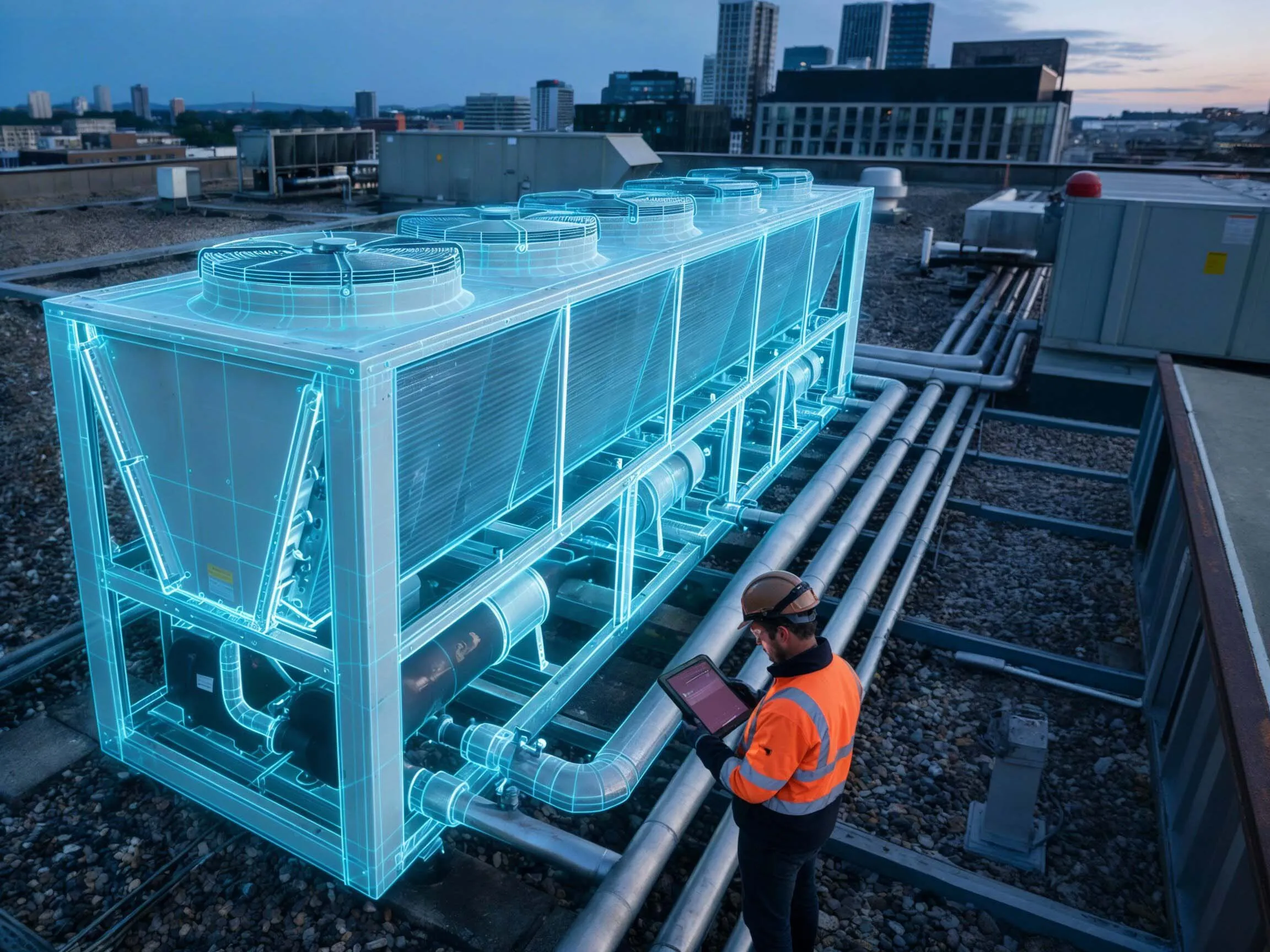

Industrial electricity prices affect industries differently. The business impact depends on electricity intensity, operating hours, the share of flexible load, contract structure, and the technical or regulatory limits within which a site must operate.
No official dataset provides one representative electricity price for every automotive plant, pharmaceutical facility, chemical site, data center, or energy-intensive production process. Sector averages can therefore provide context, but they cannot replace the company’s actual contract, grid tariff, load profile, and relief status.
These are two different things. The price shown throughout this article is what a company actually pays for electricity; Germany’s Industriestrompreis is a separate, targeted relief mechanism for 2026 to 2028 that covers 50% of a production site’s eligible electricity consumption, rather than a universal low tariff.
This article focuses on sector-specific exposure and operating constraints. Current German price benchmarks are covered in Current Industrial Electricity Price in Germany in 2026. Eligibility and support rules are explained in Industrial Electricity Price 2026: What It Actually Covers on Your Electricity Bill.
How Does the Industrial Electricity Price Affect Automotive Manufacturing?
Automotive manufacturing is exposed through continuous utility loads rather than through the industrial electricity price alone. Paint shops, ventilation, compressed air, cooling, and welding operate across varying shifts, so a lower market price reduces cost but does not remove avoidable consumption from fixed ventilation, pressure, or cooling settings that stay unchanged regardless of production volume.
Automotive manufacturing combines batch-based production with large utility systems. Paint shops, ventilation, compressed air, cooling, welding, assembly, and supporting infrastructure can all contribute to electricity demand, but their operating profiles differ substantially across plants.
Higher electricity prices increase the cost of every production hour and can make short demand peaks more expensive where capacity or maximum-demand charges apply. The impact is especially material when ventilation, pressure, temperature, or cooling settings remain fixed even as production volumes and weather conditions change.
A lower market price reduces expenditure, but it does not remove avoidable consumption caused by excess ventilation, static pressure settings, simultaneous heating and cooling, uncoordinated schedules, inefficient cooling operation, or poorly managed equipment starts.
The operational challenge is to reduce this exposure without affecting paint quality, worker safety, indoor-air requirements, takt times, or production availability. An etalytics project at Stellantis’ Rüsselsheim paint shop cut paint-shop ventilation energy use by more than 60% through demand-based ventilation and predictive operation that adapts utility systems to production and ambient conditions while preserving required operating conditions. (Source: etalytics.)
Read the automotive case study: AI Cuts Ventilation Energy Use at Stellantis Paintshop
Eligibility for the German industrial electricity price cannot be inferred from the broad automotive label alone. It must be assessed against the eligible economic activities listed in the applicable German funding rules, the classification of the production site, and the scheme's other programme conditions, including that it covers only a defined proportion of eligible electricity consumption. Neither an industry label nor high electricity consumption alone establishes entitlement to support. (Source: BMWE, 16 April 2026.)
How Does the Industrial Electricity Price Affect Chemical and Pharmaceutical Production?
Chemical and pharmaceutical sites run cooling, cleanrooms, and process utilities continuously, creating a persistent base load that makes the effective electricity price material to annual operating costs. Eligibility for the industrial electricity price is not automatic. Some chemical activities qualify under Germany’s support framework, but pharmaceutical eligibility must be checked site by site.
Chemical and pharmaceutical facilities often operate cooling, refrigeration, cleanrooms, pumps, ventilation, compressed air, and process utilities continuously. This creates a persistent base load and means that even small changes in the effective electricity price can materially affect annual operating costs.
The commercial effect differs within the sector. Some chemical activities are included among the electricity-intensive activities identified by the German support framework, while eligibility cannot be assumed for every pharmaceutical company or site. Formal sector classification and the program requirements must be checked individually. (Source: BMWE, 26 May 2026.)
The larger operational issue is that utility optimization must preserve product quality, validated environmental conditions, temperature and humidity limits, pressure relationships, safety requirements, and production availability. These constraints are not exceptions to optimization. They define the safe operating space within which optimization must work.
Digital twins can model interactions across cooling generation, distribution, pumps, ventilation, and process demand, and constraint-based optimization can help operators act on those interactions within approved boundaries. Where AI-based control is implemented, its operating scope and limits must be defined and validated for the specific installation, with operator oversight retained. Done this way, the value lies not only in lower energy use, but also in more stable operating conditions and a traceable basis for decisions.
An etalytics project with Merck KGaA cut cooling electricity use by 21% in the optimized system segment, showing a related approach applied to cooling in a pharmaceutical production environment.
Related examples: Merck Reduces Cooling Energy Use with AI Optimization and EISKIG: AI Optimization for Industrial Cooling Systems.
How Does the Industrial Electricity Price Affect Data Centers?
Data centers run IT equipment, power infrastructure, and cooling continuously, so consumption and cost exposure tend to rise with IT load and power density; the resulting bill still depends on the effective price, contract structure and site charges. The industrial electricity price isn't automatic either: data centers must meet the same formal activity classification as other sectors to qualify.
Data centers are exposed to electricity prices because IT equipment, power infrastructure, and cooling systems operate continuously. The financial effect grows with IT load and power density, while cooling demand also changes with weather, workload, and the selected temperature and redundancy strategy.
The complete electricity bill is not determined by the commodity price alone. Contract structure, grid charges, peak demand, backup and storage operation, cooling efficiency, and the relationship between IT and facility load all influence the effective cost of delivering digital capacity.
Data-center demand is not fully flexible because uptime and service commitments must be protected. Depending on the infrastructure available, operators may have flexibility in cooling setpoints, equipment sequencing, thermal storage, battery schedules, or on-site generation; each option must be assessed individually against thermal, redundancy, and service-level constraints, rather than treated as one coordinated capability.
A lower electricity price does not correct inefficient cooling or poorly coordinated equipment. It can reduce the immediate cost of inefficiency while leaving the underlying operational exposure unchanged. Data centers are also not automatically eligible for the targeted German industrial electricity price. Eligibility must be checked against the formal activity classification. (Source: BMWE, 16 April 2026.)
An etalytics project with Telehouse cut cooling electricity use by 10.4% on the first optimized cooling unit in an already-efficient data center, showing that incremental cooling optimization can still unlock savings after earlier efficiency work. (Source: etalytics.)
Related data-center resources: Telehouse AI Cooling Optimization and AI Cooling Readiness Checklist.
How Does the Industrial Electricity Price Affect Other Energy-Intensive Industries?
Metals, paper, glass, ceramics, cement, and semiconductor production can see electricity represent a significant share of conversion cost, making price relevant to margins and site competitiveness. Several of these activities are included in Germany’s industrial electricity price support framework, but eligibility still depends on formal sector classification rather than a general energy-intensive label.
Electricity prices can materially influence the competitiveness of metals, paper, glass, ceramics, cement, semiconductor, and other electricity-intensive production. In these industries, electricity may represent a significant share of conversion cost, which makes the effective price relevant to margins, investment decisions, and the attractiveness of individual production locations.
The operational exposure is not identical across these sectors. Core process loads such as furnaces, electrolysis, heat treatment, or semiconductor production may have limited short-term flexibility. Auxiliary systems such as cooling, pumping, compressed air, ventilation, material handling, and storage can often provide a different operating window.
Optimization must therefore distinguish between loads that define product quality or throughput and loads that can be adjusted without affecting the process. The objective is not simply to reduce electricity use. It is to improve the relationship between electricity cost, production output, equipment condition, and operating risk.
The value can extend beyond energy-cost savings. Depending on site configuration and operating strategy, better system coordination can also support peak-demand management, more predictable energy costs, and more effective use of existing on-site generation. Equipment-stress or resilience benefits should be claimed only where backed by a specific supporting example. Companies should assess both the gross market price and their effective price after taxes, grid charges, and eligible reliefs.
Several electricity-intensive manufacturing activities are included in Germany’s support framework, but eligibility remains tied to the formal sector classification and program conditions rather than to a general description such as “energy intensive.” (Source: BMWE, 26 May 2026.)
Across all four industry groups, the same principle applies: the market benchmark is only one input. The business impact emerges from the interaction between the electricity contract, the site load profile, operating constraints, relief eligibility, and the systems that can respond safely.
The next article in this series focuses on the practical levers for reducing electricity costs, including efficiency, peak-demand management, flexible load shifting, forecasting, and the coordination of procurement with operations.
Sources
Sources were retrieved on July 23, 2026. The BMWE eligibility sources were re-verified on October 8, 2026; the remaining links should be re-checked before publication. Links are listed in order of first appearance.
1. etalytics, “AI Cuts Ventilation Energy Use by 60% at Stellantis Paintshop.” Automotive example of demand-based ventilation and predictive utility operation under production and indoor-condition constraints.
2. BMWE, “Industriestrompreis wird eingeführt – Europäische Kommission genehmigt das Entlastungsinstrument für die energieintensive Industrie,” published April 16, 2026. Source for the sector-based eligibility framework and the principle that formal classification determines access to support.
3. BMWE, “Im Fokus: Wettbewerbsfähige Strompreise – Industriestrompreis entlastet die Industrie,” published May 26, 2026. Source for examples of eligible manufacturing activities and the requirement to assess eligibility at the production-site level.
4. etalytics, “Merck Reduces Cooling Energy Use by 21% with AI Optimization from etalytics,” published February 11, 2026. Pharmaceutical and life-science example of AI-based cooling optimization in an operating production environment.
5. etalytics, “EISKIG – Energy Intelligence System for Smart Cooling Systems in Industrial Buildings,” published October 24, 2025. Cross-industry source for digital twins, industrial cooling, and constraint-aware operating strategies.
6. etalytics, “Telehouse unlocks further cooling efficiency in an already optimized data center.” Data-center example of cooling optimization using an existing system and digital-twin-based operation.
7. etalytics, “Is Your Cooling Infrastructure Ready for AI-Driven Optimization?”, published February 19, 2026. Source for data-center operational prerequisites, controllability, data availability, and verifiability.