Optimize Complex Energy Systems

AI Adaptive Energy Control Under Changing Conditions

Reduce avoidable energy consumption across cooling, heating, ventilation, and electrical infrastructure

Adapt operations to weather, internal loads, production schedules, equipment behavior, and changing energy prices

Maintain stable operating conditions in mission-critical and energy-intensive environments

Built for operations, energy, facility, utility, automation, and technical teams responsible for reliable, efficient, and resilient industrial energy infrastructure.

Trusted by leading data centers, manufacturers, and energy innovators.

Control Complexity

Static Control Cannot Keep Up With Dynamic Energy Systems

Industrial energy systems do not operate as isolated assets. Cooling, heating, ventilation, electrical supply, storage, and on-site generation influence each other continuously. Optimal operating points shift with weather, internal loads, production schedules, occupancy, energy market signals, and equipment condition. In practice, inefficiencies rarely result from one single issue. Ventilation may run above actual demand, chillers may operate when free cooling would be sufficient, heating and cooling systems may work against each other, batteries or CHP units may not be coordinated with the thermal system, and operators may spend valuable time chasing setpoints manually.

Energy is wasted through conservative setpoints, siloed controls, and missed system interactions
Teams spend too much time manually adjusting controls and troubleshooting symptoms
Equipment runs longer than necessary, increasing wear and maintenance pressure
Sites miss opportunities to use favorable weather, thermal inertia, storage, or on-site generation intelligently
Volatile energy prices increase the cost of inefficient operation and missed flexibility potential
What You Get

System-Level AI Control Built on Digital Twins

etalytics connects operational data across your energyinfrastructure, creates system-level transparency with digital twins, anddeploys AI-driven optimization that operators can understand and trust. Insteadof optimizing one asset at a time, etalytics coordinates the full system withindefined operating boundaries to improve efficiency, resilience, andsustainability.

The solution can be introduced step by step, starting with afocused use case and scaling across additional systems, assets, or sites oncethe business case is validated.

Cooling optimization

Coordinatechillers, pumps, cooling towers, valves, hydraulics, and free cooling to reduceenergy input while maintaining cooling performance

Heating optimization

Improvegeneration, distribution, and setpoint strategies across boilers, heat pumps,heat exchangers, and thermal storage where available

Ventilation and air handling optimization

Adjust airflow, supply air temperature, and fresh airratios to actual demand instead of static assumptions

Multi-energy optimization

Coordinate HVAC and thermal systems with electricalinfrastructure, batteries, CHP, PV, and microgrids where relevant

Simple Process

How it works

etalytics follows a structured three-step deployment model.

Platform integration
We connect to existing infrastructure such as SCADA, BMS, PLCs, historians, submeters, utility interfaces, weather data, and relevant tariff or market signals. The standard approach is to use existing data, sensors, meters, and control infrastructure first instead of adding new hardware.
Digital twin setup
We structure data by system, asset, and energy flow, then model the relevant physical and operational relationships. This creates transparency, identifies inefficiencies, validates optimization potential, and can provide virtual measurements such as estimated volume flows when direct measurements are not available.
AI control deployment
Based on the validated system understanding, etalytics deploy optimization logic in open-loop recommendation mode or closed-loop adaptive control. Control actions operate within defined boundaries and include transparency, manual override options, and fallback strategies for mission-critical operations.
Measurable Impact

Operational Improvements That Matter

Lower energy costs

Reduce total energy input and cost across the optimized scope.

Measured by normalized kWh or MWh consumption, energy cost in EUR or USD, and savings compared with an agreed baseline.

Lower CO2 emissions

Reduce emissions by operating assets more efficiently and shifting operations where lower-carbon energy is available.

Measured by CO2e reduction over a defined period.

Less manual effort

Reduce manual setpoint changes, overrides, and reactive troubleshooting.

Measured by manual intervention rate, override events, and operator time spent on recurring control adjustments.

Lower equipment runtime and wear

Avoid unnecessary operation and prioritize efficient modes such as free cooling, optimized part-load operation, and coordinated asset use.

Measured by runtime hours, start-stop cycles, and utilization of active versus passive or more efficient modes.

Higher stability and supply quality

Maintain temperatures, pressures, humidity, airflow, or other operating parameters within defined boundaries.

Measured by deviation from target ranges and percentage of time within operating limits.

More intelligent use of flexibility.

Use thermal inertia, storage, on-site generation, and price signals where relevant.

Measured by shifted load, avoided peak demand, use of favorable tariffs, or demand response participation.

Validated business case

Quantify savings potential, technical fit, risk, and implementation effort before scaling.

Measured by expected savings versus solution cost and a clear rollout decision.
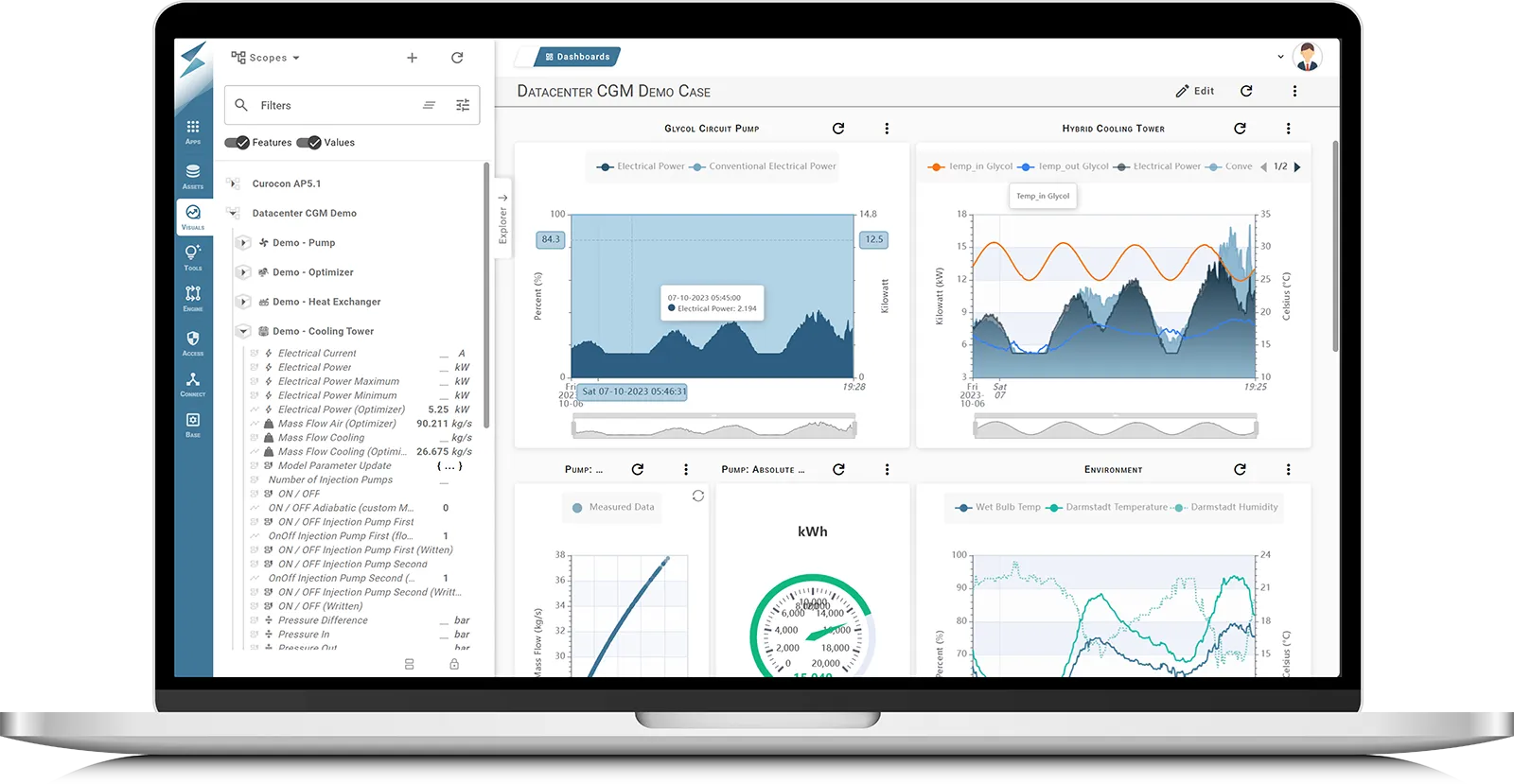
Dashboard mockup
Use Cases and Industries

Where Adaptive Energy Control Delivers Value

Data centers

Optimize cooling plants, free cooling, hydraulic distribution, airflow-related dependencies, and supply temperatures while protecting mission-critical uptime and stability.
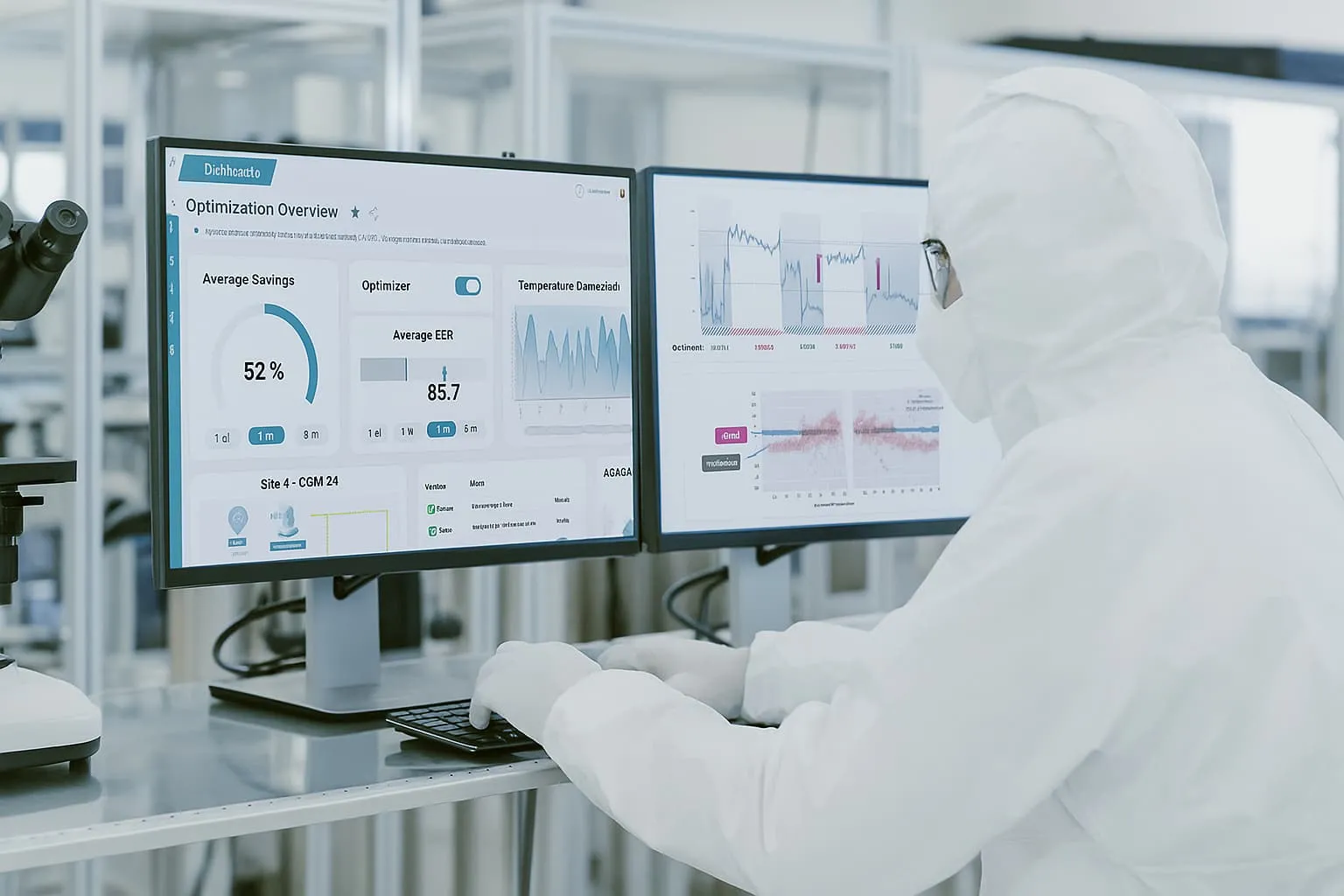
Pharmaceuticals and clean environments

Improve HVAC and utility efficiency while maintaining stable environmental conditions, compliance requirements, and operational boundaries.

Chemicals and industrial production

Coordinate cooling, heating, ventilation, thermal utilities, and electrical infrastructure under fluctuating production loads and changing energy prices.

Manufacturing and automotive

Reduce energy waste in process cooling, ventilation, heating, and site-level energy systems with variable production schedules and operating modes.

Large commercial and high-load buildings

Improve performance in complex HVAC environments where demand, occupancy, weather, and operating schedules change continuously.

Why etalytics

Because efficiency software should do more than show dashboards.

etaONE® turns your operational data into a live digital twin of your energy system and uses AI to continuously identify the best operating strategy for your site. The result is lower energy cost, earlier detection of performance drift, and better operational decisions with less manual work – without replacing your existing infrastructure.

System-level optimization, not siloed fixes

etalytics optimizes across cooling, heating, ventilation, electrical infrastructure, storage, CHP, and microgrids.

Digital twin foundation

Physical and data-driven models make complex system behavior transparent and provide the basis for reliable optimization. 

AI operators can trust

Recommendations and control actions are explainable, bounded, and validated against real operating behavior. 

Built for critical infrastructure

The solution supports fallback strategies, manual override options, and operation within defined safety and reliability boundaries.

Existing-infrastructure-first approach

Projects usually start with available sensors, meters, data sources, and control points, with additional hardware recommended only where core measurements are missing, or model accuracy would materially improve. 

Business-case driven delivery

etalytics focuses on optimization scopes where expected savings and operational value exceed solution cost and create a validated business case. 

Fast path to value

A focused first implementation can often be completed in roughly three months once access, data, and customer-side decisions are available, depending on project scope and customer readiness. 

Ready for the next step?

Start With a Feasibility Assessment

The feasibility assessment identifies where AI adaptive energy control can create measurable value at your site. Together, we review the system scope, available data, control points, operational constraints, savings potential, and implementation path. 

  • Map relevant HVAC, thermal, electrical, storage, and on-site generation systems 
  • Assess available data such as electrical power, temperatures, pressures,volume flows, equipment states, runtimes, setpoints, weather, and tariff or market signals 
  • Identify optimization levers, operating constraints, and mission-critical boundaries 
  • Estimate savings potential, CO2 reduction, operational value, and implementation effort 
  • Define a focused first use case and rollout roadmap 

Trusted by operators across data centers and industry

Thank you! Your submission has been received!
Oops! Something went wrong while submitting the form.
FAQ

Questions? We’ve got you covered.

What is AI adaptive energy control?

AI adaptive energy control uses operational data, digital twins, and optimization algorithms to continuously adjust how complex energy systems operate. It helps systems respond to changing weather, internal loads, equipment behavior, production schedules, and energy prices while staying within defined operating boundaries.

Is this only about HVAC?

No. HVAC is often an important starting point, but etalytics can optimize broader industrial energy infrastructure, including cooling, heating, ventilation, electrical systems, batteries, CHP, PV, storage, and microgrids where relevant.

What data do you need to start?

Typical inputs include electrical power, temperatures, pressures, volume flows, equipment states, runtimes, setpoints, control signals, weather data, and tariff or market data where relevant. If key signals such as volume flows are missing, etalytics can often estimate virtual measurements from available data and physics-based relationships.

Do we need additional hardware?

Usually not. The standard approach is to start with existing sensors, meters, and control infrastructure. Additional hardware is only recommended in specific cases, for example when critical measurements are missing or when additional sensors would materially improve model accuracy or control quality.

How much integration effort is required?

Integration effort depends on system scope, data access, signal quality, control-point availability, and cybersecurity requirements. Many projects begin with existing SCADA, BMS, PLC, historian, and metering infrastructure and expand once the first use case is validated.

Which teams need to be involved?

Successful projects typically involve operations, energy management, facility or utility teams, automation or BMS stakeholders, and IT or cybersecurity teams. This ensures operational ownership, technical system access, secure integration, and clear governance.

How do you address security and GDPR?

Most optimization projects use technical operational data rather than personal data, but security and data-processing boundaries are still defined clearly. etalytics supports secure deployment models, role-based access, encrypted communication, integration boundaries, and cybersecurity review processes. For mission-critical infrastructure, fallback mechanisms and manual override options help keep systems within approved operating limits at all times.

Can the system control mission-critical infrastructure safely?

Yes. Deployment can start in open-loop mode with recommendations before moving to closed-loop control. Closed-loop control operates within predefined limits, preserves manual override, and includes fallback strategies so reliability and operational safety remain protected

How quickly can we expect time-to-value?

Time-to-value depends on customer readiness, data access, system complexity, and decision speed. A focused standard implementation can often be completed in roughly three months once the required data access, technical interfaces, and project decisions are available.

What does the pricing model look like at a high level?

Pricing depends on scope, assets, integration complexity, deployment model, and optimization value. The commercial model should be tied to a valid business case: the goal is to create more savings and operational value than the solution costs.

How do we get started?

Start with a feasibility assessment. It clarifies technical fit, quantifies savings potential, identifies risks and constraints, and defines a realistic first use case and rollout path.