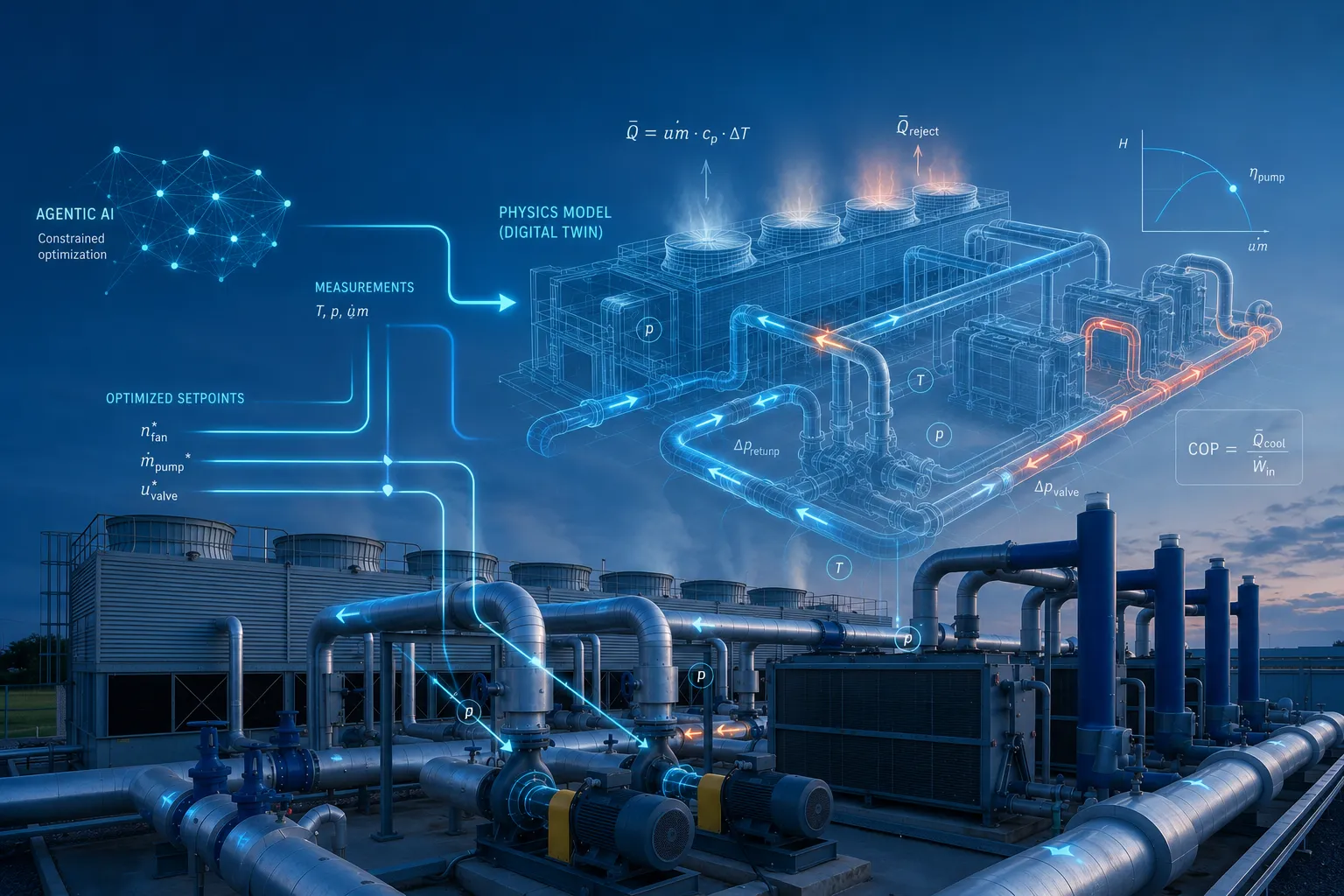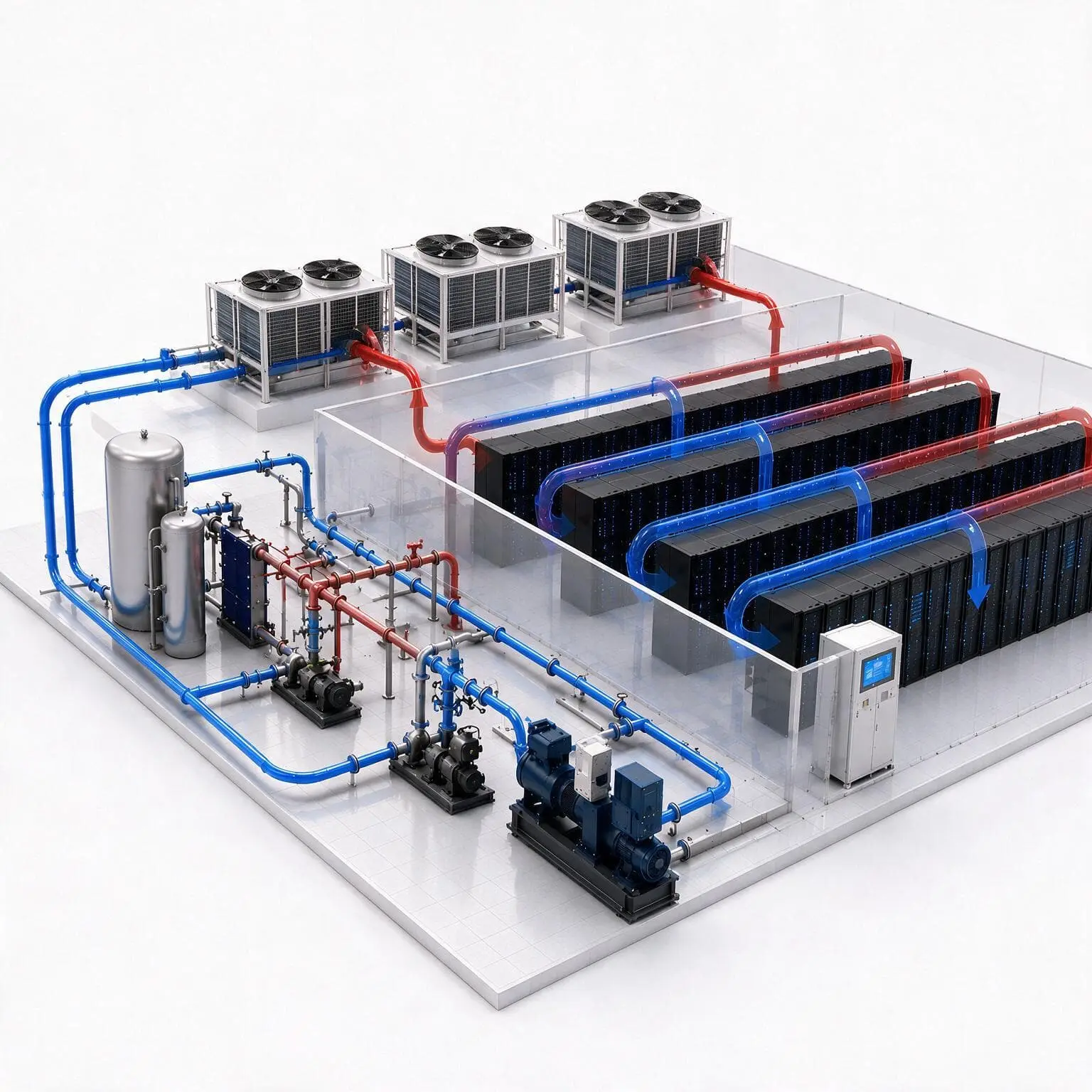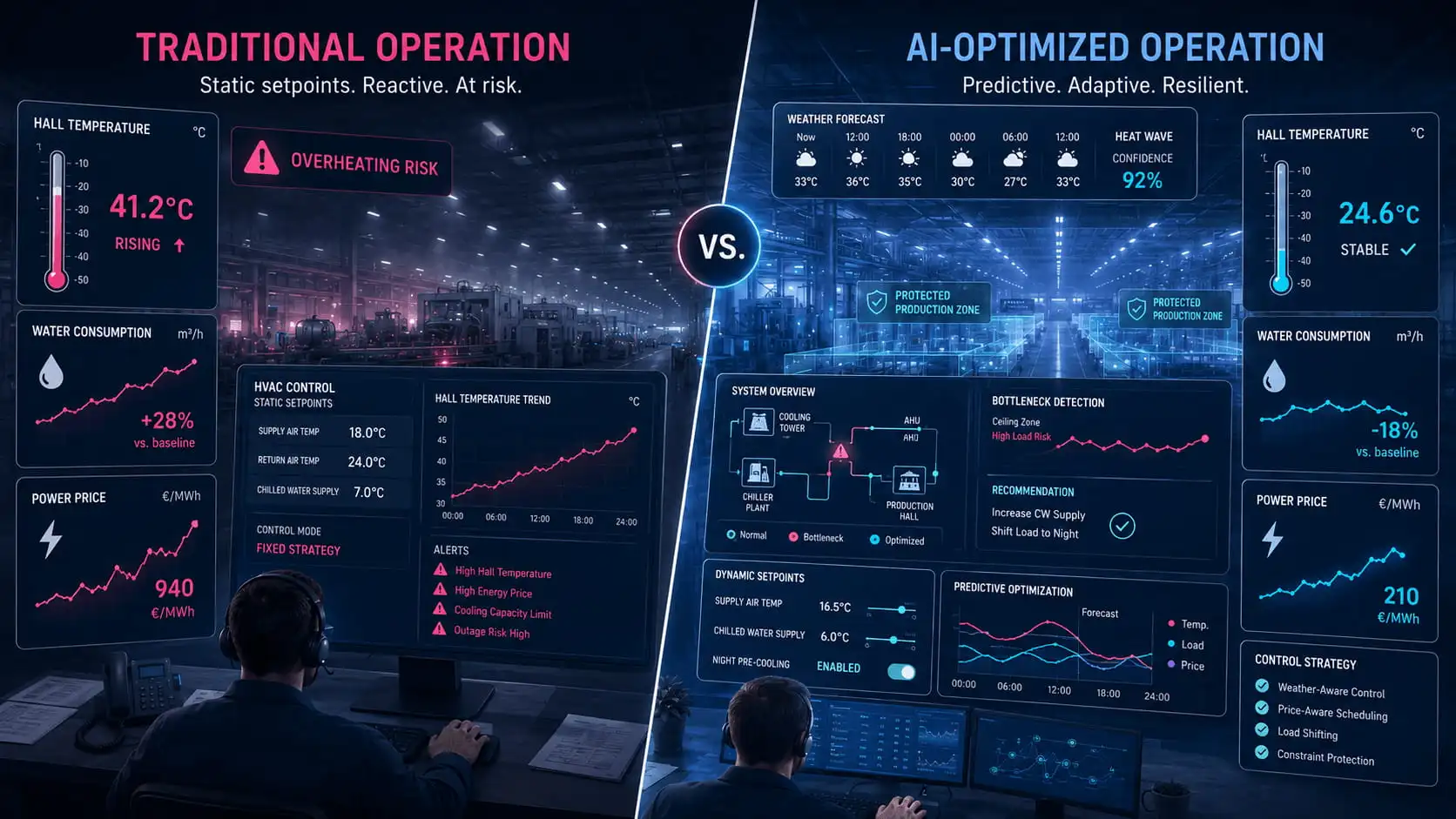
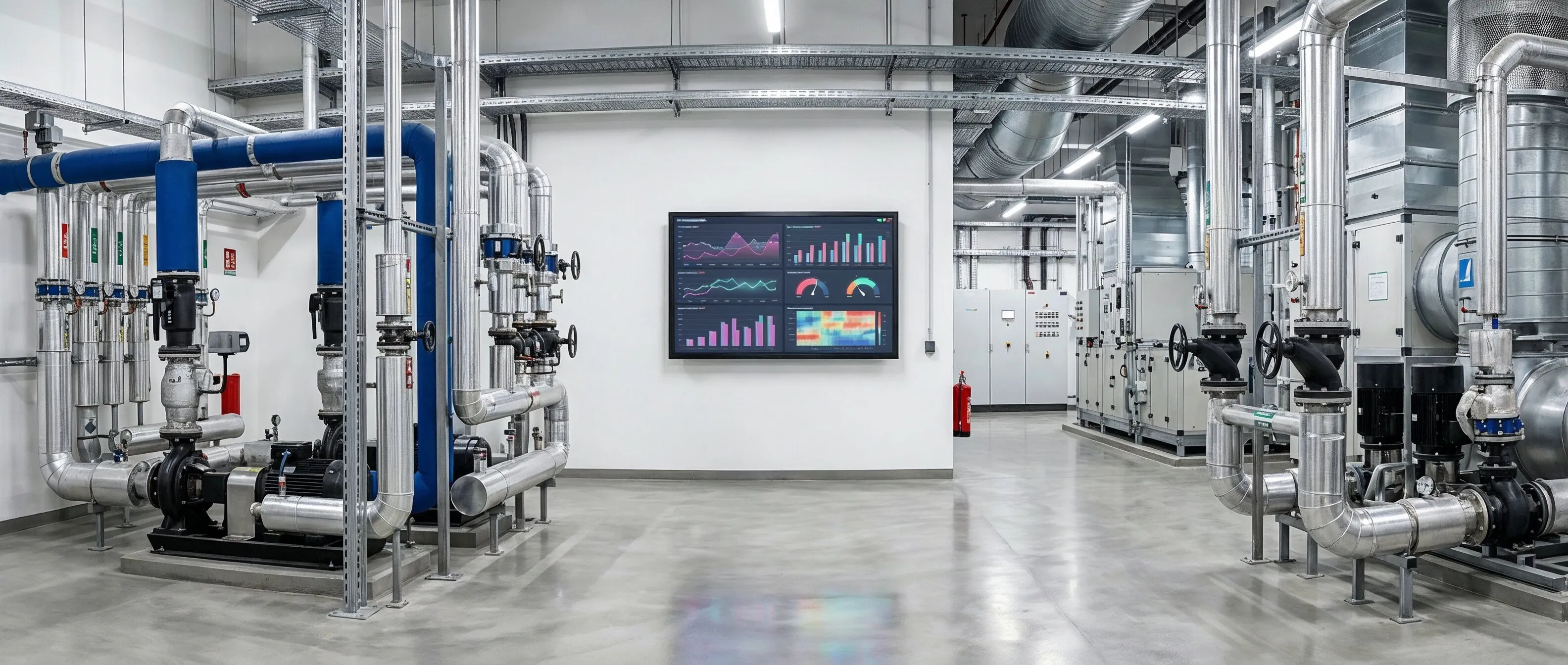
If your organization is investing in Pharma 4.0, it is easy to focus on production equipment, MES, analytics, and quality systems. Utilities and HVAC often stay in the background, even though they are some of the most measurable systems in the plant.
This post is a practical blueprint for making utilities “Pharma 4.0-ready” in a regulated environment.
What are “Pharma 4.0 utilities”?
Pharma 4.0 utilities are utility and HVAC systems that are operated as part of a connected, context-rich, data-driven ecosystem, not as isolated building systems. That typically means integrating operational technology (OT) and information technology (IT) data so decisions can be made faster, documented clearly, and applied within defined constraints. (ISPE)
ISPE describes digital transformation as strategic integration across manufacturing and business functions to enable real-time insights that optimize processes and support compliance and product quality. (ISPE)
Utilities are uniquely suited to digital transformation because they generate continuous operational data and directly influence environmental conditions, equipment reliability, compliance performance, and energy efficiency.
Why utilities are often the fastest place to make digital transformation measurable
PharmTech notes that digital monitoring and real-time analytics are supporting broader shifts such as predictive maintenance and increased viability of continuous processing. (PharmTech) For plant leaders, that implies a more practical requirement:
- the plant needs faster detection of drift
- the plant needs fewer surprises
- the plant needs stable operation under more variable schedules
Utilities and HVAC can deliver those outcomes with measurable signals, such as:
- environmental stability bands
- equipment cycling behavior
- energy intensity by operating mode
- maintenance precursors before alarms and deviations
In other words, utilities are one of the few areas where digital transformation can be tied directly to measurable operational outcomes, from fewer deviations and maintenance events to lower energy costs and improved system reliability.
.webp)
Constraints-first adaptive control: what it looks like in GMP environments
The challenge is not whether HVAC systems can be optimized. The challenge is doing so without compromising validated processes, product quality, or regulatory compliance.
That is why adaptive control in pharmaceutical environments must be constraints-first.
Constraints-first adaptive control means the system adjusts setpoints and sequencing based on real conditions and operating context, while staying inside validated limits and documented rules. Changes are logged and explainable, and safe fallback modes exist. (European Commission)
EU GMP Annex 11 provides the right baseline mindset: computerized systems used in GMP activities should be validated, infrastructure should be qualified, and risk management should be applied throughout the lifecycle with patient safety, data integrity, and product quality in mind. (European Commission)
What this looks like in HVAC and chilled water systems:
- Mode-aware setpoint resets that do not change validated limits
- Sequencing logic that avoids instability and cycling
- Supervisory control that respects redundancy and safety constraints
- Clear audit trails for recommendations and actions
What it does not look like:
- constant retuning without documentation
- optimizing energy at the expense of stability
- “black box” actions without traceability
Reference architecture for adaptive utilities in Pharma 4.0
ISPE emphasizes building a cohesive, data-driven ecosystem rather than isolated initiatives. (ISPE) For utilities, success depends less on analytics alone and more on building the right data, governance, and control architecture.
A minimal reference architecture usually includes five layers:
1) Data acquisition layer
- BMS trends, SCADA, historians
- meters and submetering
- critical sensors with calibration and drift checks
2) Context layer
- asset hierarchy and naming standards
- operating mode tags (production, non-production, cleaning, changeover)
- environmental classification context where relevant
Without context, data is hard to interpret, and optimization becomes risky.
3) Governance and validation layer
This is where many projects fail silently.
- change control for control logic and optimization parameters
- access control and role definitions
- audit trails for setpoints and overrides
- lifecycle documentation
Annex 11 explicitly requires lifecycle risk management and appropriate controls. (European Commission) The FDA’s data integrity guidance reinforces the expectation that data should be reliable and accurate and that risk-based strategies should prevent and detect integrity issues. (FDA)
4) Security layer
Digitalization increases connectivity, which increases risk.
NIST’s Cybersecurity Framework 2.0 provides outcomes to manage cybersecurity risks across organizations of all sizes and sectors. (NIST CSF 2.0) For OT environments, NIST SP 800-82 provides guidance tailored to operational technology security. (NIST SP 800-82)
At a practical level, this typically includes:
- network segmentation for OT
- controlled remote access
- asset inventory and vulnerability management
- monitoring and incident response procedures aligned with plant constraints
5) Analytics and control layer
This is the layer most people start with, but it should come after the basics.
- anomaly detection to spot drift early
- predictive maintenance signals and thresholds
- supervisory optimization that proposes or applies bounded actions
- continuous measurement and verification against baselines
PharmTech highlights predictive maintenance as a key benefit of AI-enabled tooling in manufacturing. (PharmTech) Utilities are one of the most straightforward places to apply this because drift often appears in continuous signals long before failures.
A phased rollout model that fits GMP reality
ISPE lays out a phased approach to digital transformation, including aligning on goals, assessing maturity, developing a foundation architecture, piloting, scaling, and continuously improving. (ISPE)
For utilities and HVAC, the same sequence works well when adapted to GMP constraints:
Phase 1: Align on goals and constraints
Define what you are improving and what cannot change. Document constraints clearly.
Phase 2: Build the baseline and fix data friction
Time sync, sensor quality checks, consistent tagging, and a mode-aware baseline.
Phase 3: Pilot in advisory mode
Start with recommendations only. Record decisions and outcomes.
Phase 4: Supervised optimization
Bounded changes with approvals, rollback, and documentation.
Phase 5: Scale with standard patterns
Standardize what can be standardized: naming, KPIs, baseline methods, and governance templates. Keep site-specific constraints explicit.
Practical KPIs: what to track in the first implementation phase
A KPI set that works for both engineering and QA needs to show stability and control, not just energy.
KPIs for QA and compliance confidence
- excursion frequency and duration
- stability bands for temperature, humidity, differential pressure
- audit trail completeness for changes and overrides
KPIs for engineering and operations
- equipment cycling and control hunting indicators
- mean time to detect drift
- maintenance precursors versus reactive interventions
- number and duration of manual overrides
KPIs for energy and sustainability
- kWh by operating mode
- peak demand contribution from major utility equipment
- verified savings using a baseline that reflects modes and seasonality
Conclusion: Pharma 4.0 utilities require architecture and discipline, not just analytics
For many pharmaceutical manufacturers, utilities and HVAC represent the fastest path to proving the value of digital transformation.
Unlike many production-focused initiatives, utility systems generate continuous data, operate around the clock, and provide measurable opportunities to improve stability, maintenance performance, and energy efficiency.
The organizations seeing the greatest success are not treating digitalization as an analytics project. They are building a validated, secure, and context-rich operating framework where data, controls, and governance work together.
The goal is not autonomous optimization at all costs. The goal is better operational decisions within clearly defined constraints.
A practical first step is to select one utility system, define its operating boundaries, establish a mode-aware baseline, and begin with advisory recommendations before introducing automation. This creates a foundation for scalable Pharma 4.0 adoption while maintaining the control and traceability that regulated environments require.
Not sure where to begin?
Start with one utility system. etalytics can help assess your existing data, operating constraints, and optimization potential – without major infrastructure replacement or disruption to regulated operations.
- Read how Merck reduced cooling energy use by 21%
- Contact our team for an initial assessment