Energy investigations usually do not fail for lack of data. In most facilities, the measurements already exist: power, temperatures, flows, equipment states, alarms and control histories. The time goes into deciding which of those signals belong to the problem at hand and how they fit together.
Take an afternoon rise in cooling electricity. Higher load may explain it. So might warmer outside conditions, a change in chiller staging, different pump behavior or an adjustment in the control strategy. An operator has to establish what changed, which comparisons are meaningful and whether the pattern is isolated to one asset or visible across the system. Much of that work happens before the engineering question becomes clear.
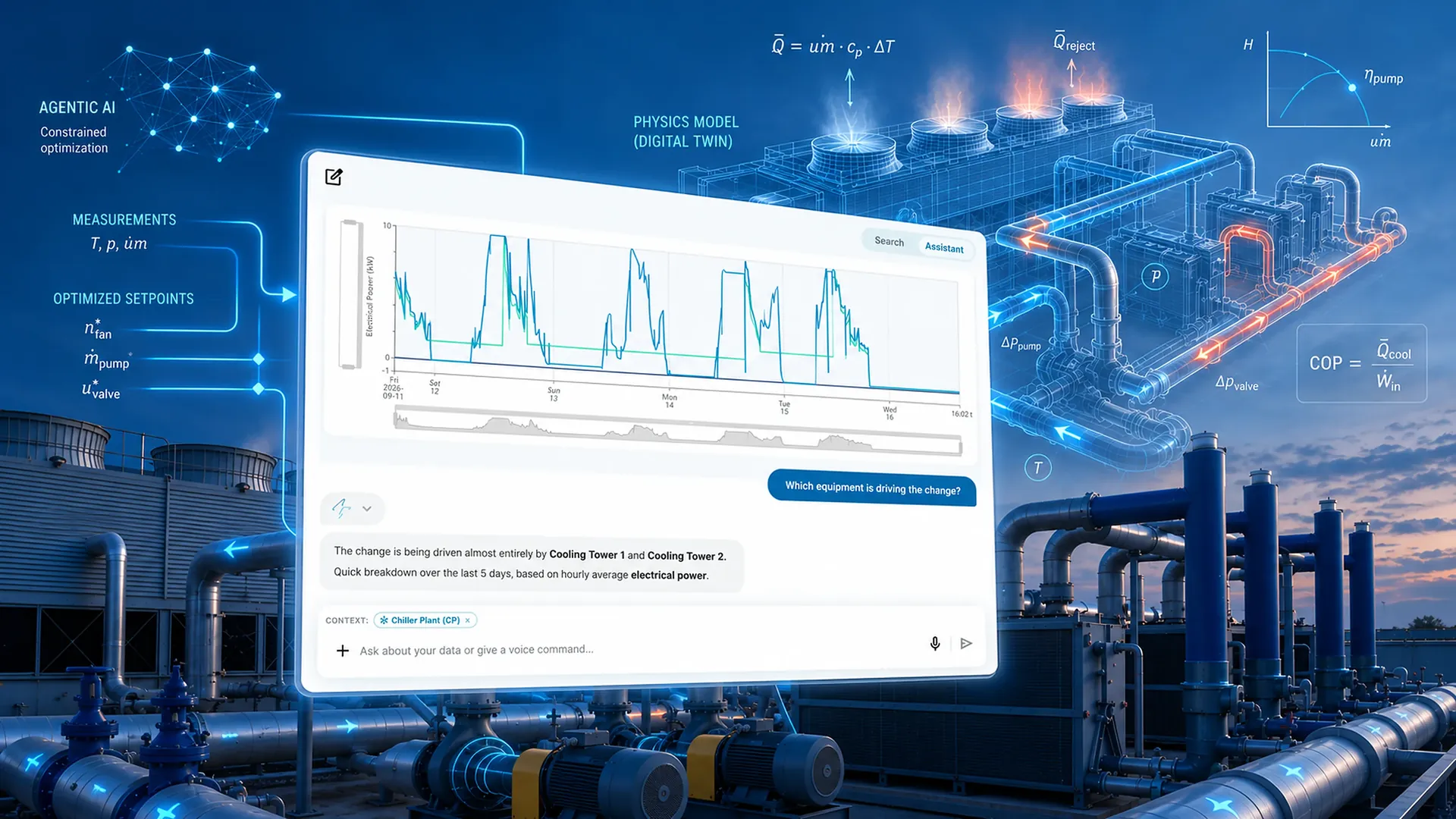
etaONE IQ is designed around this part of the workflow. It adds natural-language interaction, AI reasoning, defined etaONE tools and proactive agents to the Operational Intelligence already available in etaONE. The operator can start with the problem they are trying to understand, while the investigation stays connected to the physical system behind it.
Start with the operational question
An operator might begin with:
“Why did energy use increase yesterday afternoon?”
The question says nothing about which pump, chiller, cooling tower or measurement matters. A useful investigation needs the structure behind the data: which assets were operating, how they are connected, what conditions they were running under and how their behavior compares with other periods.
etaONE already provides that context. Operational data is mapped to the physical system, historical behavior is available for comparison and physics-based digital twins represent how relevant parts of the system behave.
etaONE IQ works with this information as the investigation develops. The next question might be:
“Which equipment is driving the change?”
From there, the operator may narrow the analysis to a particular part of the cooling system, compare it with similar equipment or look at what changed immediately beforehand. If the question later becomes:
“What happens if the load keeps rising?”
the earlier observations and the part of the system under investigation remain in context.

Operational analysis rarely follows a fixed sequence. A first hypothesis may turn out to be wrong. One signal raises a question about another asset. A comparison that initially looked sensible may become less useful once load or ambient conditions are taken into account. Carrying the system context forward allows the investigation to move with the evidence.
Reasoning connects the question to the right data and tools
Natural language provides an easy way into the investigation, but there is still a technical question behind every prompt: what information and which etaONE capabilities are needed to deal with the request?
etaONE IQ interprets the question in the context of the system and selects the information and tools required for the next step. Depending on the task, this may involve retrieving operational data, comparing signals, identifying associated equipment or using etaONE models to examine how current conditions may develop.
The language model and the engineering models have different roles. etaONE's physics-based digital twins represent physical system behavior. etaONE IQ uses the context in etaONE to determine which data, model or platform capability belongs in the workflow.
A question about future conditions, for example, should draw on the engineering models and operating state in etaONE. It is not a free-form prediction generated by the language model.
We have covered this relationship in more detail in Why industrial energy optimization needs more than general AI, including why generative AI and physics-based models serve different purposes in operational systems.
The workflow is not tied to one interface
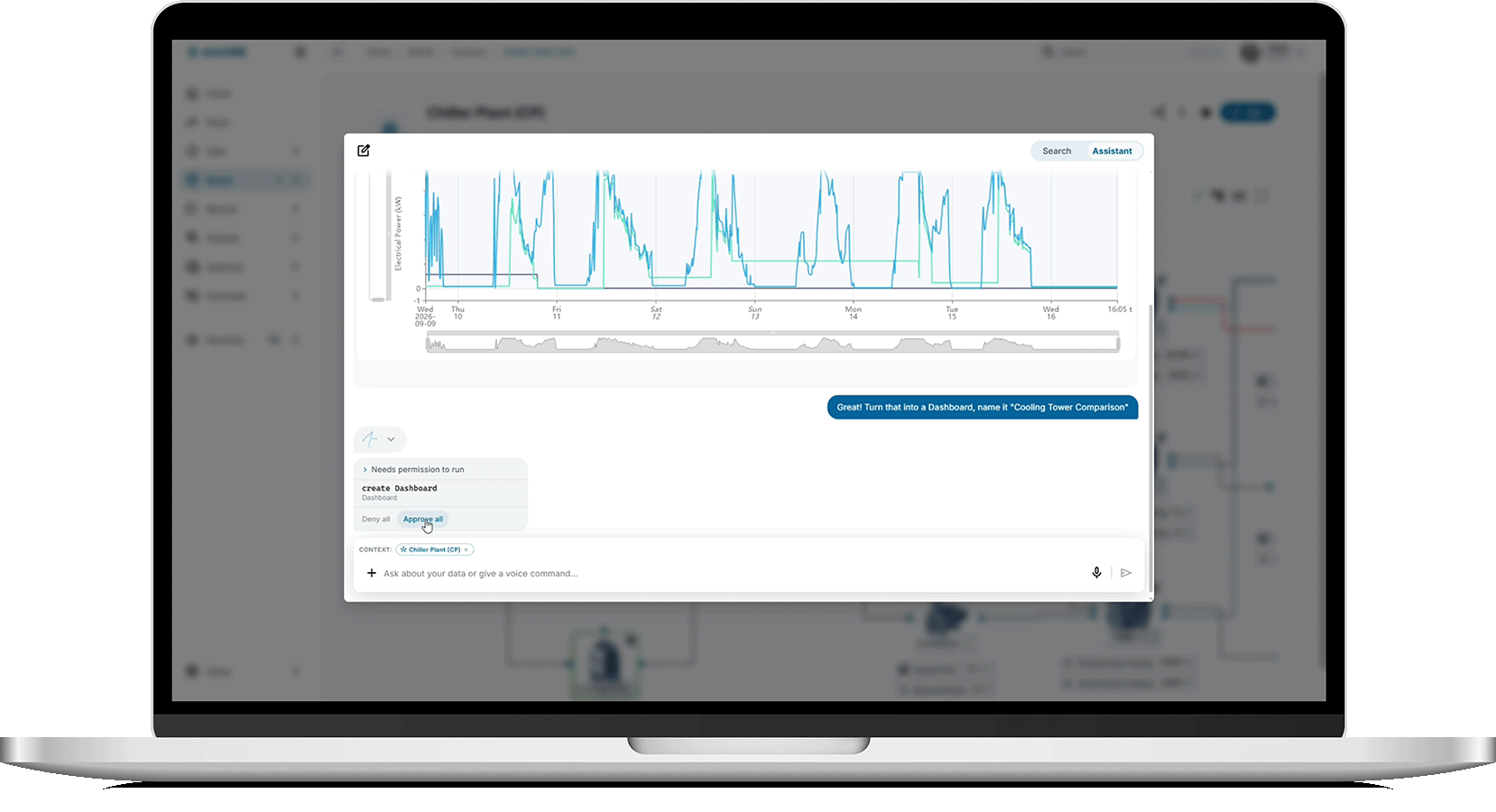
etaONE IQ does not have to stop at a text response. It can work with supported parts of the etaONE interface, including navigating workflows, working with forms, explaining complex dashboards and creating contextual visuals from live operational data.
If an operator wants to bring several signals together for closer inspection, that analysis can continue directly in etaONE.
The interaction can also happen outside the etaONE interface. Many larger organizations already have approved AI environments and rules around which models or vendors employees are allowed to use. etaONE IQ can connect to customer-approved LLM infrastructure, while MCP support makes defined etaONE capabilities available through compatible enterprise AI interfaces, including environments such as ChatGPT or Claude where MCP is supported.
For European deployments using the etalytics-hosted model option, the model infrastructure can be hosted in the European Union.
The interface or model may differ from one organization to another. The operational context and etaONE capabilities behind the interaction remain the same.
Some investigations can start before anyone asks
The examples above begin with somebody noticing a change. In practice, many operational issues develop gradually.
Equipment efficiency can drift over time. Changing load or environmental conditions can move a cooling system closer to a constraint. Several measurements may begin to depart from expected behavior without producing an obvious alarm.
etaONE IQ agents run in the background while the infrastructure continues operating. They monitor operations 24/7, investigate anomalies and, where applicable, use etaONE capabilities and physics-based models to examine how current conditions may develop.
If a developing issue deserves attention, the first round of investigation can already be prepared for the operations team: what changed, which part of the system is involved and what evidence led to the finding.
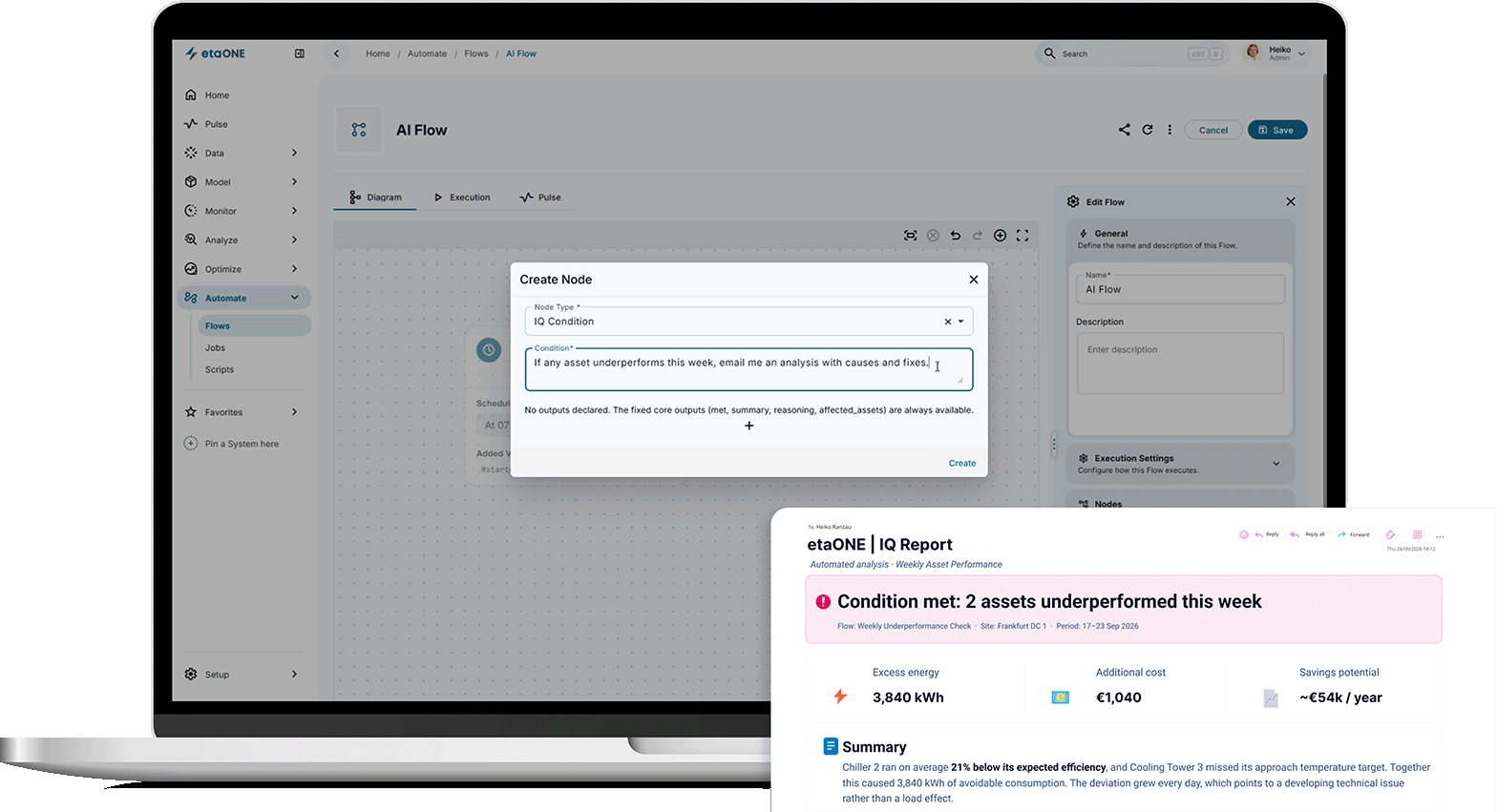
The operator may decide that no action is needed, ask for another comparison or take the analysis in a different direction. The advantage is that the investigation begins with more context than an isolated alarm or unexplained deviation.
Our article on agentic AI in data center operations looks more closely at bounded agents and the wider question of autonomy in critical infrastructure.
What changes for the operations team
The benefit becomes more visible when the same approach is used across day-to-day operations. Investigations are often revisited as conditions change or when a similar pattern appears again. Keeping useful operational context available gives the team a better starting point instead of requiring the same groundwork each time.
It also reduces some of the routine effort around the investigation itself. Less time goes into finding the relevant signals again, repeating comparisons or establishing what has already been checked. The engineering judgment still sits with the people operating the system, but more of their attention can go to the decisions and improvements that require it.
Research note: etaONE IQ includes capabilities developed in the context of etaGPT, an ongoing collaborative research project investigating the use of large language models in industrial energy systems.
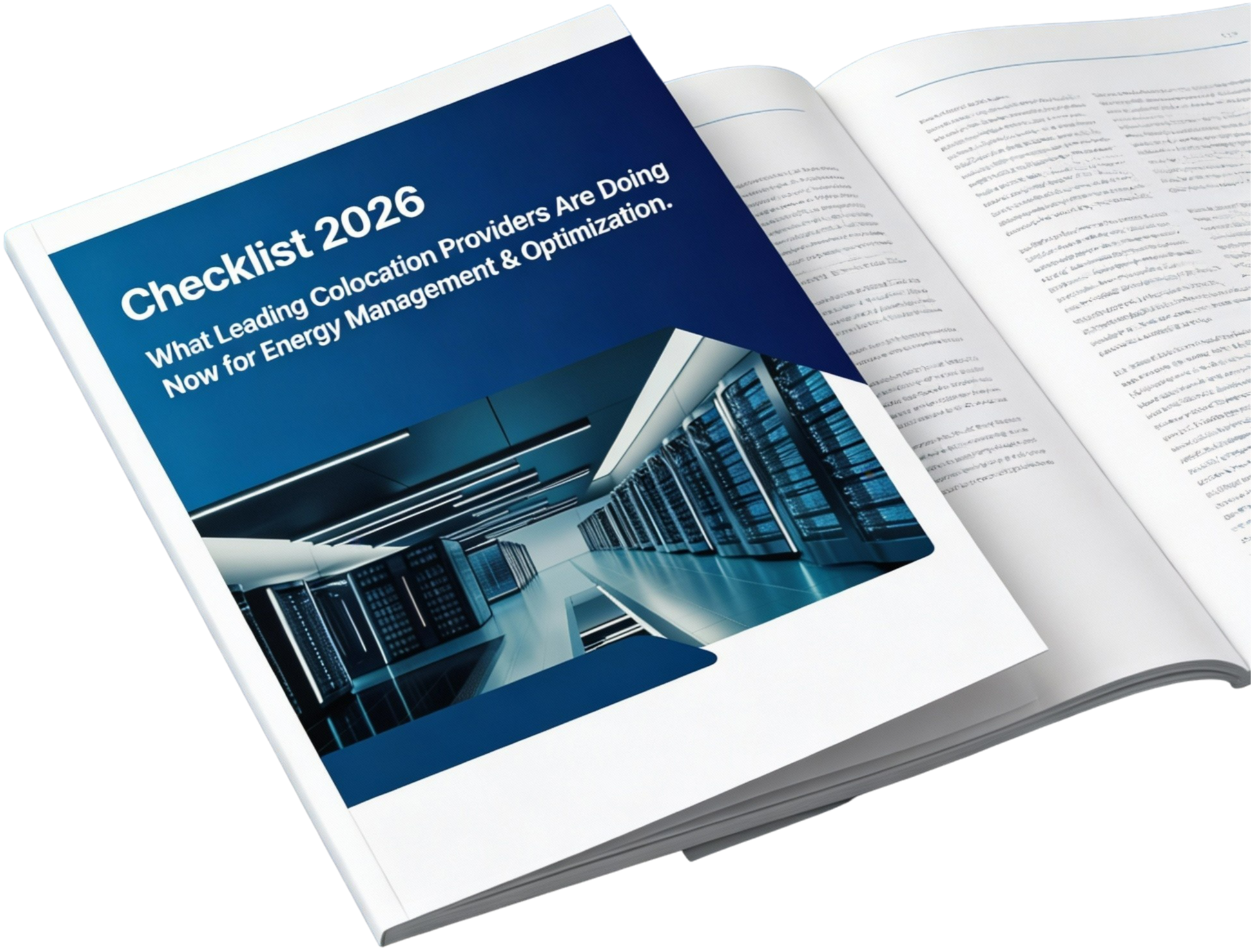
Less time investigating. More time improving.
etaONE IQ brings AI reasoning, etaONE tools, and proactive agents into energy operations – helping teams investigate faster, identify emerging issues, and focus on the decisions that matter.