Book Demo
Book Demo

Demand Response is the short-term adjustment of electricity consumption in response to price signals, grid conditions, or system needs. It aligns energy demand with available supply, rather than relying solely on additional generations.
Rising volatility from electrification, dynamic prices, and renewables integration makes Demand Response essential. It addresses fluctuations on both supply and demand sides of the grid. For utilities and grid operators, it manages peak demand and ensures reliability. For commercial and industrial users, it enables better energy management, cost savings, and monetization of flexible usage, such as in EU/DE programs like those from DSR initiatives.
Electricity use responds to external signals like dynamic tariffs, wholesale prices, grid states, or utility events. When thresholds are met, adjustments occur via load shifting to off-peak times, temporary reductions, or activation of local generation and assets. Automation through energy or building management systems ensures fast, repeatable actions within safe limits.
Strategies match site needs and process constraints, such as adjusting HVAC or cooling setpoints, briefly curtailing non-critical loads, or shifting processes outside peak hours. They also include coordinating batteries or on-site generation, managing EV charging, and limiting select equipment. In data centers measures prioritize uptime, temperature controls, and AI-driven cooling. Industrial sites emphasize process stability.
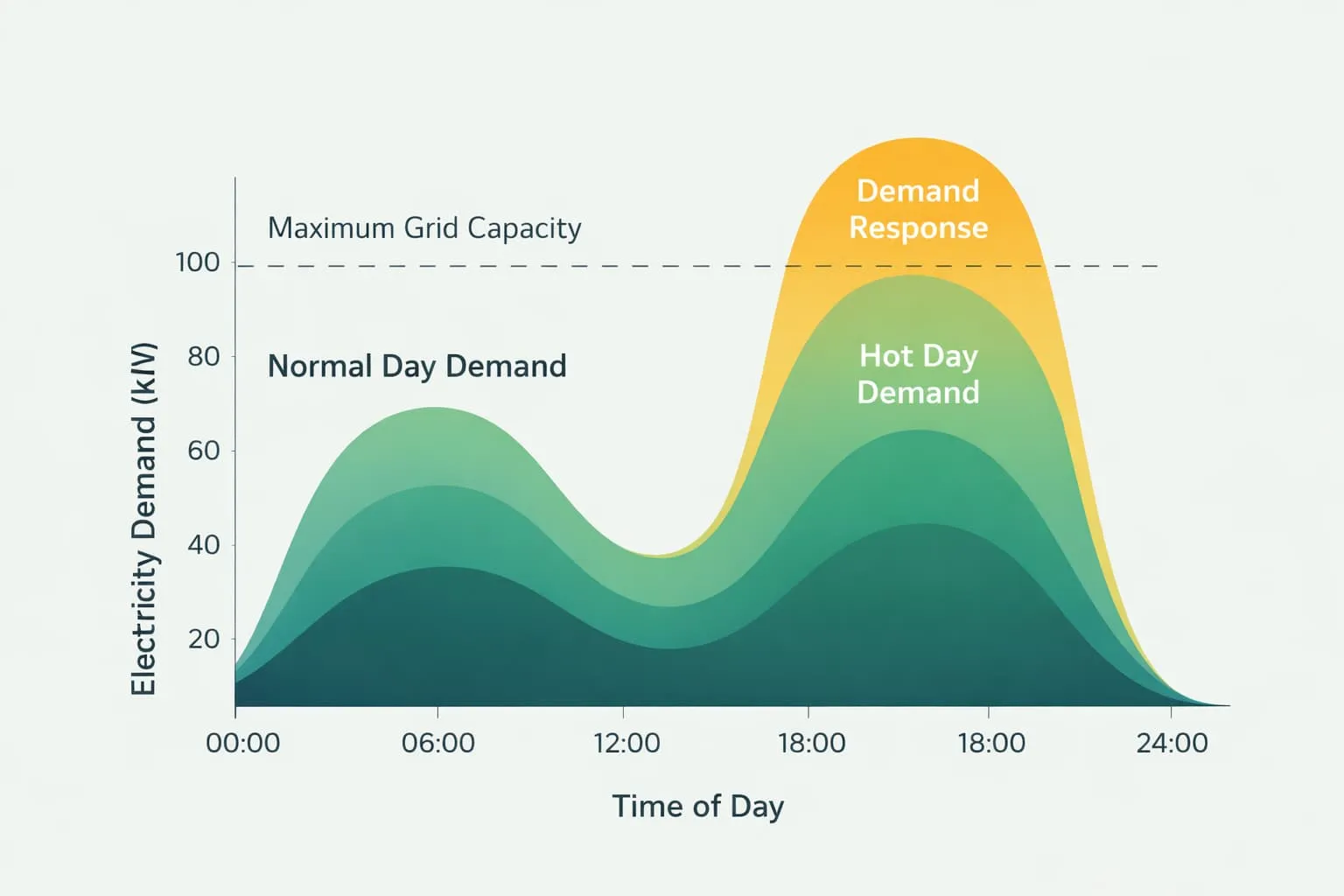
Strategies match site needs and process constraints, such as adjusting HVAC or cooling setpoints, briefly curtailing non-critical loads, or shifting processes outside peak hours. They also include coordinating batteries or on-site generation, managing EV charging, and limiting select equipment. In data centers measures prioritize uptime, temperature controls, and AI-driven cooling. Industrial sites emphasize process stability.
Key hurdles include lacking automation or real-time monitoring, unclear baselines for impact measurement, system integration efforts, uncertain tariffs/programs, and post-event rebound effects. Success demands technical readiness and operational discipline.
Systematically identify flexible loads and define operating limits with fail-safes. Automate response logic, continuously monitor performance, report results, and regularly review tariffs and programs (e.g., EU/DE updates for 2026).
With growing loads, distributed energy resources, and renewables expansion, it provides cost-effective grid balancing without new plants or infrastructure.





We empower industries to make complex energy systems and operations more intelligent, efficient, and resilient — with AI and digital twins that operators can trust.
