
2026 Checklist - Is your data center AI ready?
Colocation providers face rising energy demand, price volatility, and stricter sustainability expectations. Efficiency isn’t a trade‑off with resilience - it’s a multiplier. For hyperscalers and enterprise data centers, the case for energy efficiency is obvious: reduce consumption, reduce the bill. Colocation providers, however, often operate under a different assumption. If energy costs are passed directly to tenants, why invest in efficiency at all? The short answer: because the benefits go far beyond the energy bill.
Leading providers combine high-efficiency infrastructure (cooling, UPS, power), intelligent operations (DCIM, analytics), and cleaner power (PPAs, on-site generation, storage) to win on cost, uptime, and ESG. In many cases, efficiency improvements also translate directly into higher margins, lower risk, and stronger competitiveness for the operator. In today’s market - defined by rising power demand, volatile prices, grid constraints, and increasing sustainability expectations - energy efficiency is no longer a side project. It has become a core operational and strategic lever for colocation providers.
The Misconception: “If Tenants Pay, Efficiency Doesn’t Matter”
A common belief in colocation is: If tenants pay for power and cooling, the operator doesn’t benefit from energy savings. This logic is understandable - but incomplete. While electricity may be billed as a pass-through item, inefficiency still creates real costs and risks for the operator: tighter capacity margins, higher failure probability, compliance exposure, and weaker positioning in customer tenders. At the same time, efficiency unlocks value that is often overlooked when focusing narrowly on the energy invoice. Ignoring efficiency doesn’t just leave savings on the table - it compounds operational and commercial risk.
Why Efficiency Still Pays Off for Colocation Providers
1. PUE Commitments Often Favor the Operator
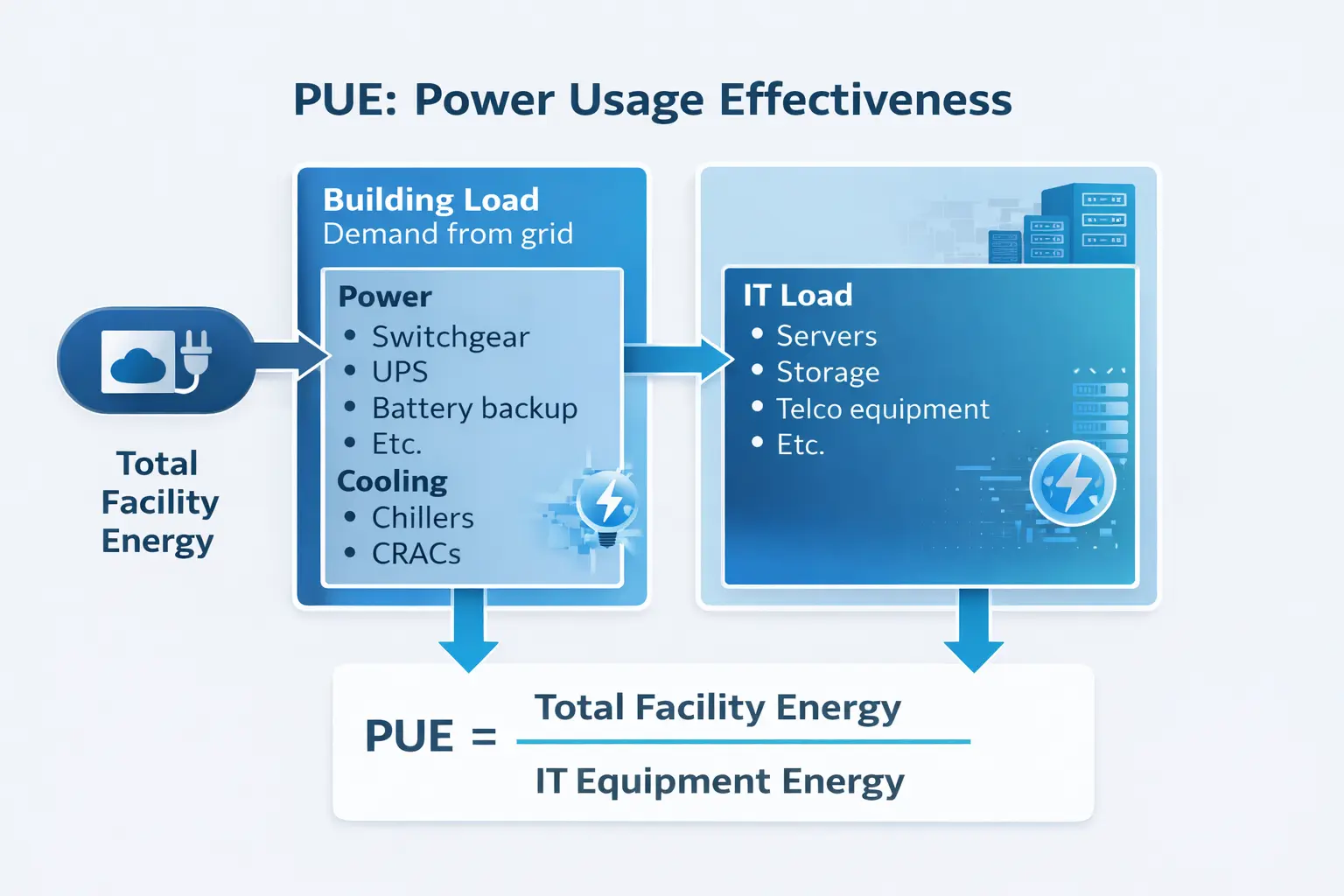
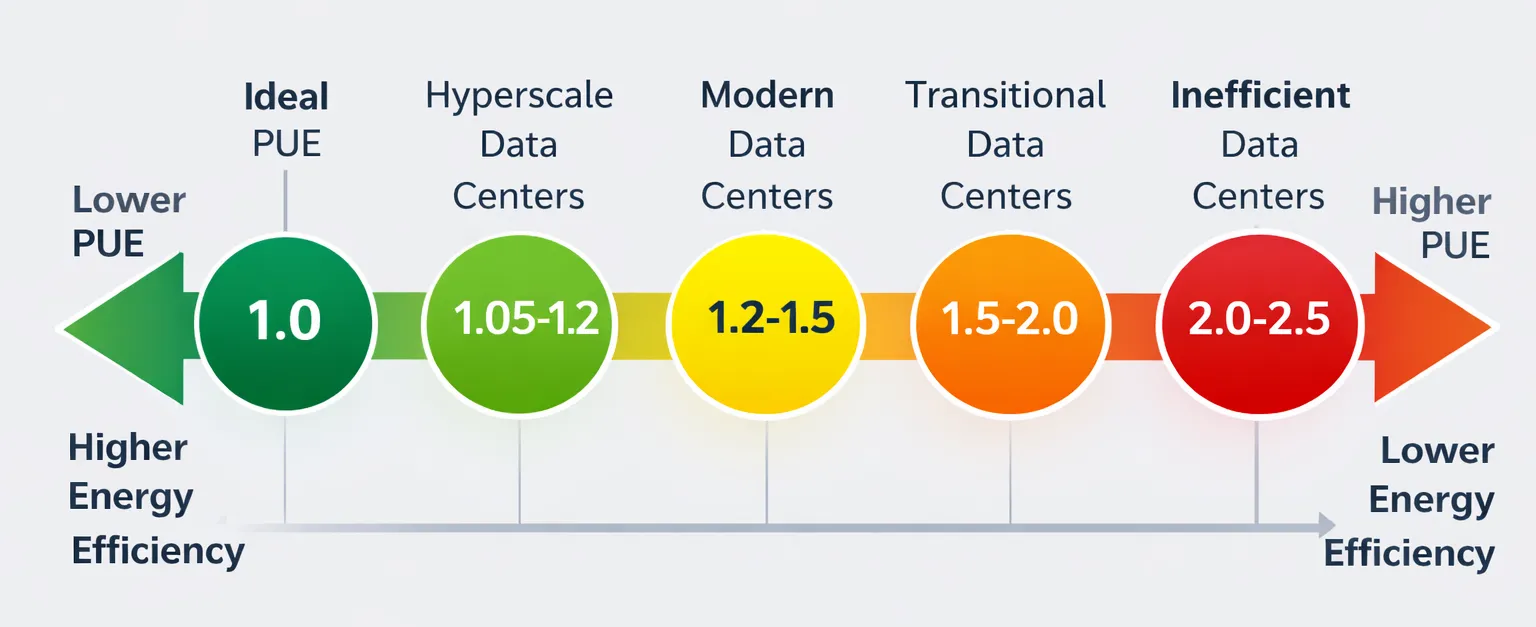
In many contracts, customers require a fixed or maximum PUE that is lower than the site’s actual, measured PUE. In these cases, the colocator effectively absorbs the difference. Any reduction in real facility overhead - through better cooling control or infrastructure efficiency - directly benefits the operator’s margin.
2. Minimum Load Commitments Turn Savings into Margin
Even where PUE targets are met, most colocation contracts include minimum power commitments, typically around 60–80% of the rented IT load. That means: Customers are billed for a minimum IT power level, regardless of actual utilization. When actual IT load remains below this minimum, the customer’s energy bill does not decrease. If the operator reduces facility energy consumption through better PUE or cooling efficiency, the avoided energy cost accrues at least partially to the operator.
Example (simplified): How Better PUE Translates into Real Economic Value
A customer rents 1 MW of IT capacity with a 70% minimum energy commitment but operates below that threshold. Improving PUE from 1.50 to 1.35 reduces facility power by over 100 kW. Over a month, this saves tens of MWh in energy costs. Depending on the contract structure, these savings may be fully retained by the operator or partially passed through to the customer via a lower PUE-based charge. In both cases, efficiency improves margin quality, resilience, and usable capacity. Cut waste. Improve resilience. Strengthen margins - even when savings are shared.
Efficiency Is Also a Reliability Strategy
Energy efficiency is often framed as an ESG or cost topic. In reality, it can also support availability and uptime - as long as optimization is engineered for operational stability.
Many “inefficient” data centers intentionally run with conservative temperature setpoints and additional safety buffers to gain reaction time during incidents. That can improve short-term resilience — but it also increases energy overhead and reduces capacity headroom.
The best-run colocation providers combine both: stable operations and efficient performance, using transparency, controls, and clear guardrails.
Improved efficiency and transparency across cooling and power assets help operators:
- Detect and eliminate waste
- Reduce peak loads on mechanical and electrical systems
- Lower thermal stress and cycling on chillers, pumps, CRAHs/CRACs, UPS, and generators
Just as importantly, modern control strategies improve reliability by making systems more predictable and easier to operate, including smooth transitions between free cooling and compressor operation (using proper hysteresis, minimum run times, and change control).
The result is higher operational stability, fewer alarms, and more headroom during critical situations - especially in high-density or fast-growing environments.
Efficiency and resilience aren’t automatically the same thing - but with the right operating strategy, they reinforce each other.
Operational and Commercial Benefits Beyond Energy Costs
Even when electricity is fully passed through, efficiency investments create value that directly matters to colocation operators:
- Higher reliability & uptime
Better-controlled cooling and power systems reduce thermal risk and operational volatility. - Easier regulatory compliance
Granular metering and transparent PUE tracking simplify reporting and help meet regulatory and contractual efficiency targets. - Increased marketability & customer retention
Customers increasingly evaluate providers on sustainability, transparency, and operational maturity. Demonstrable efficiency becomes a differentiator in RFPs and expansions. - Predictive maintenance & longer equipment life
Data-driven insights into chillers, pumps, fans, and UPS systems enable condition-based maintenance and reduce premature wear. - Stronger ESG positioning
Lower energy overhead directly reduces carbon intensity and supports customers’ own sustainability commitments.
Where the Biggest Efficiency Gains Come From Today: Cooling
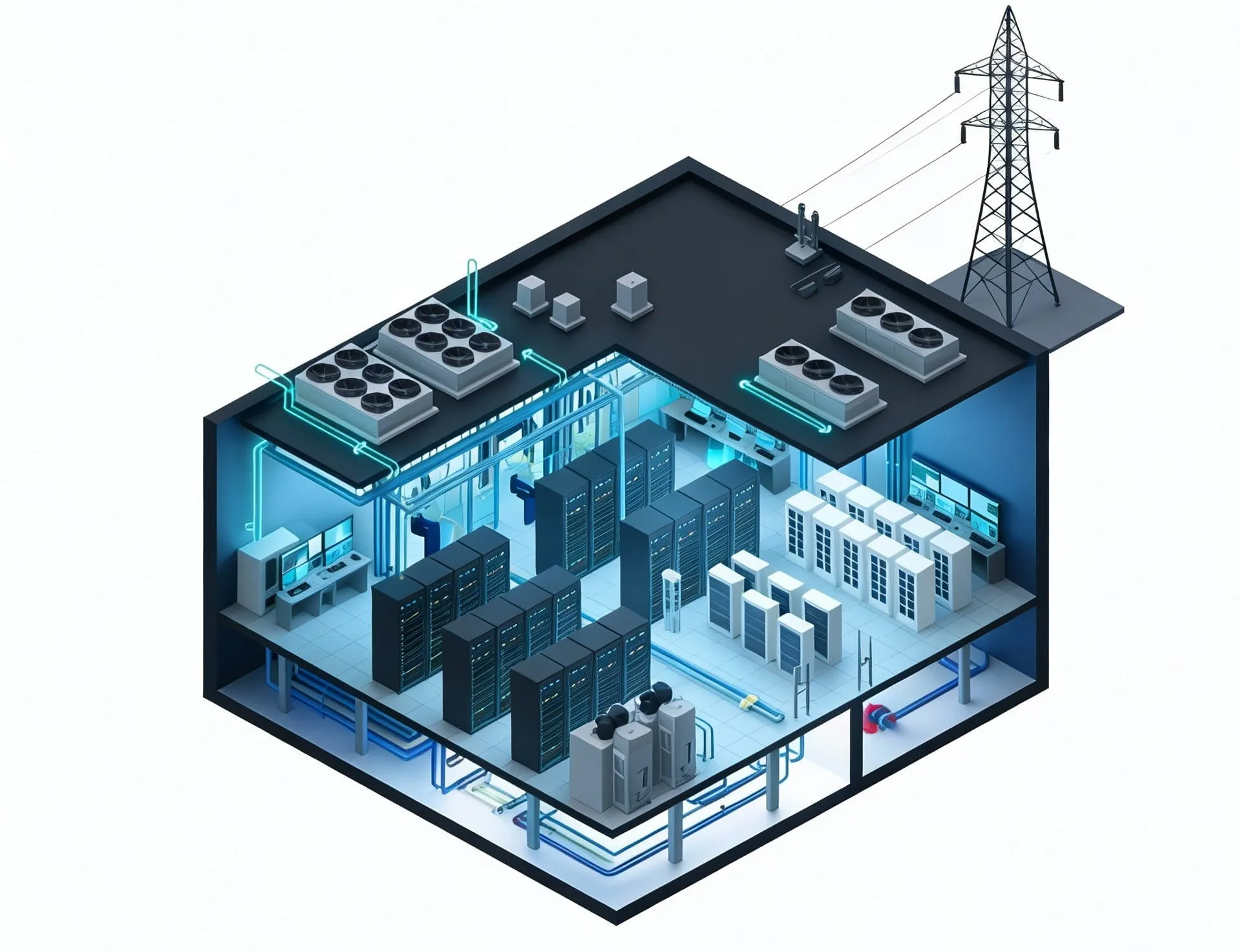
Outside the IT load itself, cooling remains the largest efficiency lever in colocation facilities. The biggest gains no longer come from optimizing individual components in isolation, but from coordinating the entire cooling chain - from rooftop equipment down to server inlets.
Modern best practice focuses on:
- Controlling to IT inlet temperatures, not return air
- Dynamically resetting setpoints based on load and weather
- Avoiding the “energy shift” problem, where savings in cooling are offset by higher server fan power
This holistic, “roof-to-server” approach minimizes total facility power, not just the consumption of one subsystem.
The Role of AI-Driven Optimization
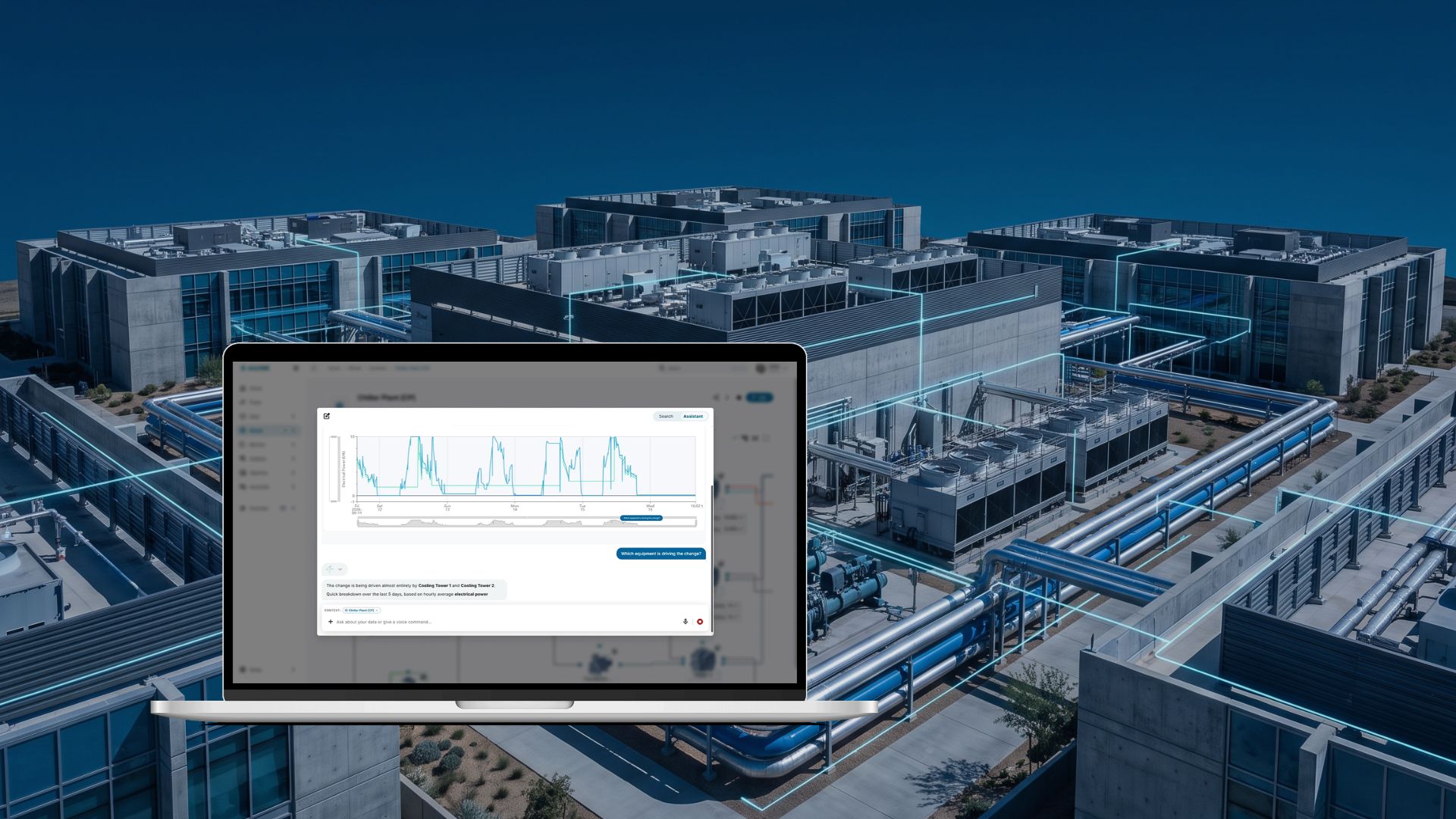
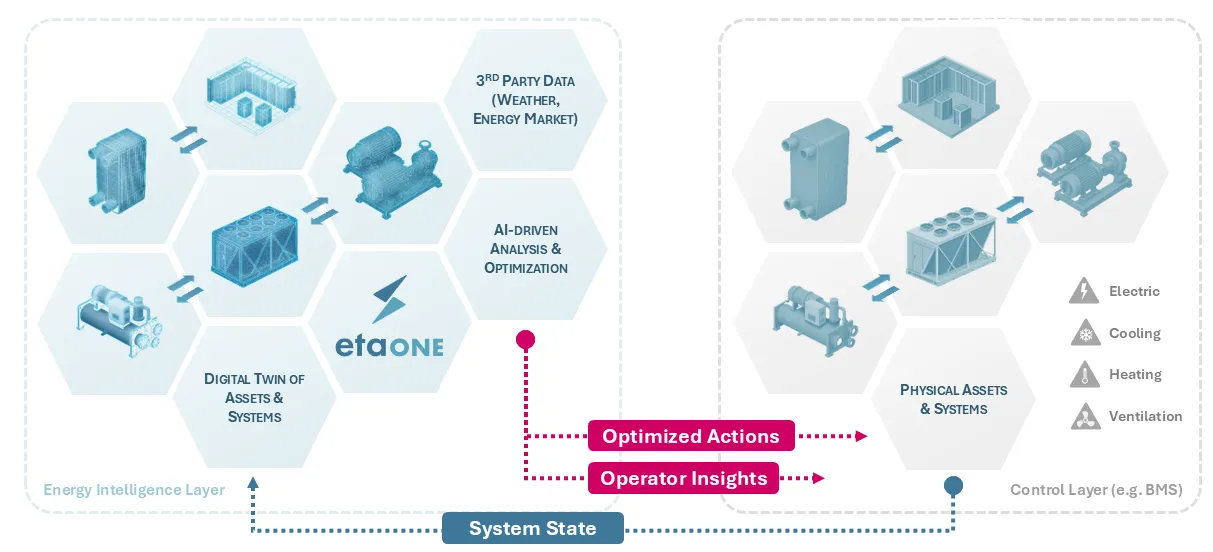
AI in colocation is not a black box and not a magic overlay. Its real value lies in coordinating complex systems safely and continuously under strict operational constraints. In practice, AI-driven optimization:
- Builds on physics-based models and real telemetry
- Forecasts load, weather, and operating conditions
- Recommends - or automatically applies - setpoint adjustments within defined guardrails
- Continuously verifies savings and operational stability
The result is persistent efficiency gains, improved thermal stability, and audit-ready transparency for operations, finance, and ESG teams.
What Leading Colocation Providers Are Doing Now (Checklist)
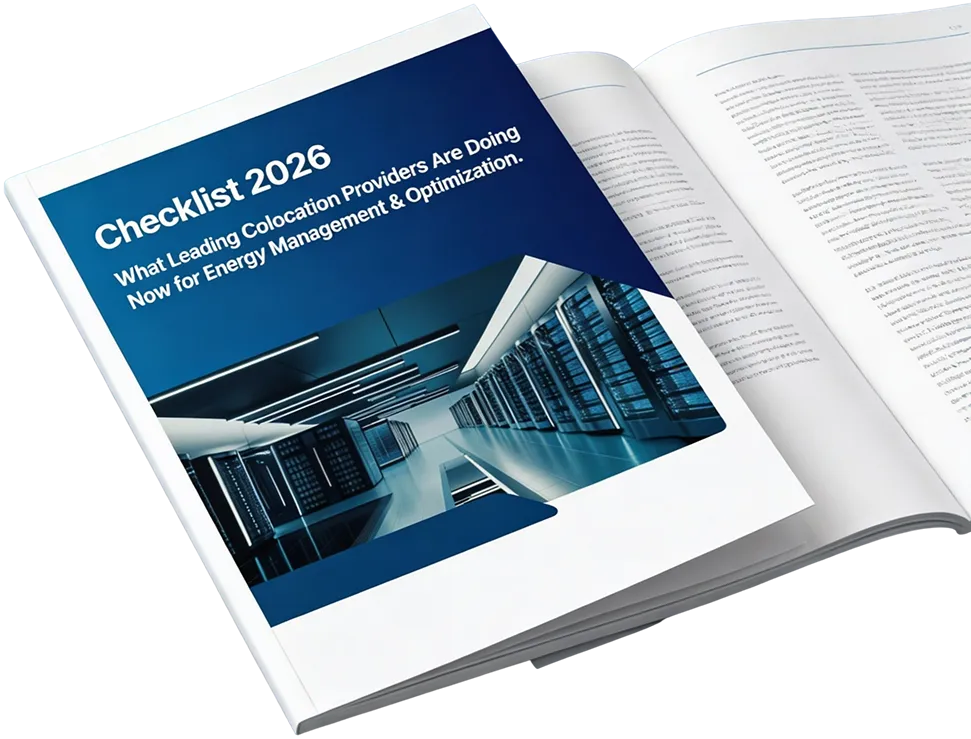
We’ve created a practical self-assessment checklist for colocation operators who want efficiency, resilience, and ESG to move together - not compete. It’s designed for facility and portfolio-level use and reflects what best-run colocation providers, large customers, and regulators increasingly expect today - from governance and metering to controls, procurement, and reporting. Use it to benchmark your current state, spot gaps, and prioritize next steps.
What you’ll get in 10 minutes:
- A clear baseline of where you stand today
- Visibility into quick wins vs. structural gaps
- A shared reference for operations, energy, and ESG teams
- A practical roadmap aligned with real colocation best practice
Conclusion: Efficiency as a Competitive Advantage
Energy efficiency has moved from a technical optimization to a strategic capability for colocation providers. Operators that systematically improve efficiency:
- Reduce operational cost and risk
- Protect and expand capacity
- Strengthen reliability and compliance
- Differentiate themselves in an increasingly competitive and sustainability-driven market
Even in pass-through power models, efficiency pays - financially, operationally, and commercially. The next step-change will not come from more hardware alone, but from intelligent, data-driven control of cooling and power systems. Providers already investing in this transformation are building a durable advantage. Those who delay risk falling behind - not just on sustainability, but on resilience and profitability as well.
Ready to assess your facility?