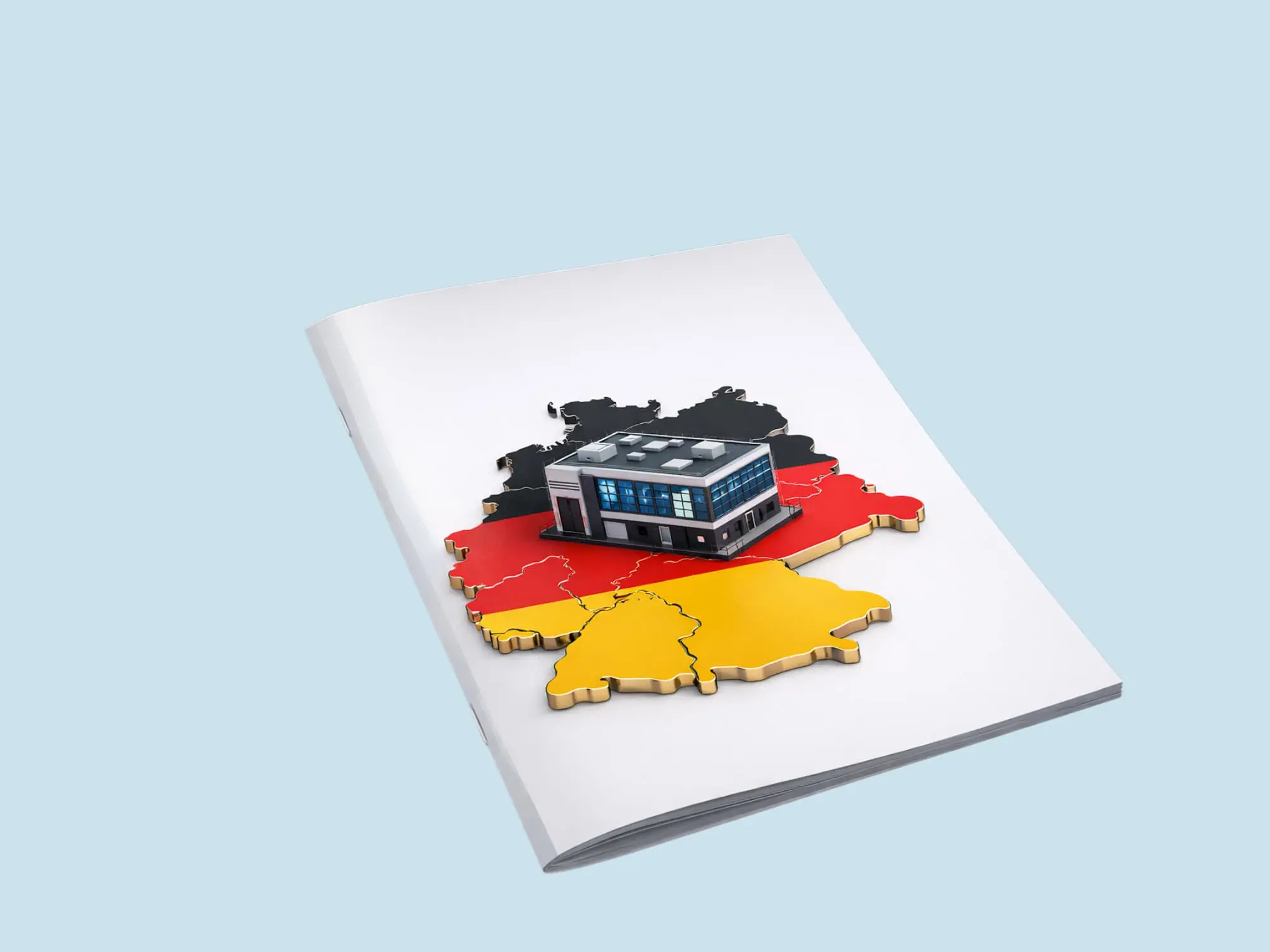
Germany has made one thing clear: data centers are no longer just background infrastructure. In its new national data center strategy, published on March 18, 2026, the German government positions data centers as a foundation for digital sovereignty, economic resilience, AI development, and long-term competitiveness. The ambition is significant: Germany wants to at least double its data center capacity by 2030 and at least quadruple AI-related capacity over the same period.
For the data center industry, this is a strong political signal. Growth is expected, but not at any cost. The strategy links expansion directly to sustainability, secure energy supply, faster grid access, and technological innovation. In other words, the future of the German data center market will not be defined by compute capacity alone. It will also be defined by how efficiently data centers use energy, integrate with infrastructure, and reduce operational impact.
Germany Wants More Data Center Capacity — and Much More AI Infrastructure
Germany is already the largest data center market in Europe by capacity and number of sites. The strategy cites around 2,980 MW of IT connection capacity in 2025, including roughly 500 MW for AI, and annual electricity consumption of about 21 TWh, or around 4% of Germany’s gross electricity consumption. At the same time, growth is accelerating total data center connection capacity and is expected to rise to 5,000 MW by 2030.
The graphic illustrates how current data center capacity is distributed across Germany’s federal states and clearly shows that Hesse accounts for by far the largest share of the German data center market.
.webp)
The graphic shows how planned data center capacity is distributed across Germany and highlights the federal states where the expansion of data center infrastructure is expected to be particularly strong.
.webp)
That growth is being driven by cloud, HPC, and especially AI workloads. The strategy highlights that the need for AI compute in Germany could increase dramatically over the next few years, while global data center electricity demand is also expected to rise sharply.
For operators, investors, and technology providers, the message is straightforward: the market opportunity is growing fast, but so are the operational and regulatory demands.
Energy Efficiency Moves to the Center of Data Center Policy
One of the most important takeaways from the strategy is that energy efficiency is no longer treated as a side topic. It is now a core requirement for the future viability of data centers in Germany. The strategy explicitly identifies energy efficiency, renewable energy, waste heat utilization, and water-saving cooling systems as key levers for sustainability, supply security, and site attractiveness.
The government also makes clear that sustainable data centers are expected to run fully on renewable electricity, minimize energy consumption through higher efficiency, integrate waste heat where possible, and consider water availability and cooling-related water use.
That is a major shift in the tone. Sustainability is no longer just a branding benefit or a compliance checkbox. It is becoming part of the business case for data center expansion in Germany.

Renewable Power Requirements Are Tightening
The strategy also reinforces the regulatory direction. Under Germany’s Energy Efficiency Act, data center operators must already cover 50% of their electricity demand with renewables on a balance-sheet basis from January 1, 2024, and 100% from January 1, 2027. The government now wants to strengthen the framework around long-term PPAs, regional renewable energy coupling, and system-supportive self-generation.
This matters because access to renewable electricity is becoming a structural factor in market competitiveness. Operators that can combine efficient operations with smart energy sourcing will be in a stronger position than those relying on conventional infrastructure logic alone.
Grid Access and Energy Integration Are Becoming Strategic Issues
Another major theme in the strategy is grid access. Germany acknowledges that a fast and reliable grid connection is now one of the most important conditions for building or expanding data center sites. At the same time, grid capacity is limited in many regions, especially in existing hotspots, and data centers compete with other large energy consumers for access.
To address this, the government plans to improve grid connection procedures, increase transparency on available capacity, and promote flexible connection agreements that allow data center sites to grow alongside grid availability. It also wants harmonized technical requirements for grid connections, ideally across the EU.
This is highly relevant for the sector. The future competitiveness of data centers will increasingly depend on how intelligently they interact with the energy system — not only how much power they consume, but when, where, and how flexibly they do so.
Waste Heat Utilization and Cooling Strategy Are No Longer Optional Topics
The strategy gives unusual prominence to operational topics that matter in everyday data center reality. It notes that strict PUE-based requirements can be difficult to apply in colocation and co-hosting models and calls for more practical rules. It also aims to make waste heat utilization easier in practice and reduce barriers that currently slow down implementation.
One particularly relevant point is the acknowledgment that waste heat projects are often hindered by missing heat network infrastructure and by tax treatment, even when operators are willing to provide waste heat at no charge or at cost. The government says it will work toward legal solutions that make such projects easier to realize.
In parallel, Germany plans to push for an EU-level Data Center Energy Efficiency Package in 2026, including a rating scheme and meaningful minimum efficiency requirements. Water demand is also expected to play a larger role, especially depending on the cooling system used.
For data center operators, this means cooling optimization, energy transparency, and waste heat integration are becoming strategic priorities — not just engineering details.
Technology Innovation Is Part of the Strategy
Germany’s strategy is not only about regulation. It also emphasizes innovation across the data center technology stack, including cooling technology, energy efficiency, waste heat use, and digital infrastructure software. The document explicitly states that innovation in the practical operation of data centers can create competitive advantages and strengthen European value creation.
That is especially relevant for European technology companies. The strategy highlights the need to strengthen companies from Germany and Europe, including SMEs and startups, and to support innovation that improves the sustainability and competitiveness of data centers.
For companies working on intelligent control, cooling optimization, and energy-aware operations, this creates a much stronger policy backdrop than before.
What This Means for the Industry
Germany’s national data center strategy confirms a trend that many in the industry have already felt: the next generation of data centers must do more than scale. They must also become more energy-efficient, more grid-aware, more transparent, and more integrated into local infrastructure.
That changes the conversation. In the years ahead, data center competitiveness in Germany will increasingly depend on questions like:
- How efficient can the facility operate?
- How well can cooling systems be optimized?
- How effectively can the site use renewable energy?
- How realistically can waste heat be integrated?
- How well can the operation align with grid and infrastructure constraints?
These are no longer peripheral questions. They are becoming central to investment decisions, site selection, operations, and future compliance.
Why This Matters to etalytics
At etalytics, we see this strategy as a clear confirmation of where the market is heading. If Germany wants to expand data center capacity while meeting sustainability and energy system requirements, operational intelligence will be essential. Efficient cooling, transparent energy flows, and optimized infrastructure performance will play a bigger role in determining which facilities are future ready. That is especially true as AI-driven demand increases pressure on energy systems and on the economics of data center operations.
Germany’s new strategy makes one thing clear: sustainable data center growth will depend not just on more infrastructure, but on smarter infrastructure.
Want to explore how data centers can improve energy efficiency and cooling performance while preparing future regulatory and infrastructure requirements? Get in touch with etalytics.

Want to go deeper?
Rechenzentren als Basis einer erfolgreichen, digitalen Transformation, Bundesministeriums für Digitales und Staatsmodernisierung (BMDS), bmds.bund.de/themen/digitale-wirtschaft/recheninfrastruktur
Nationale Rechenzentrumsstrategie, Am 18. März 2026 hat das Bundeskabinett die nationale Rechenzentrumsstrategie veröffentlicht, PDF Nationale Rechenzentrumsstrategie 18.3.2026